

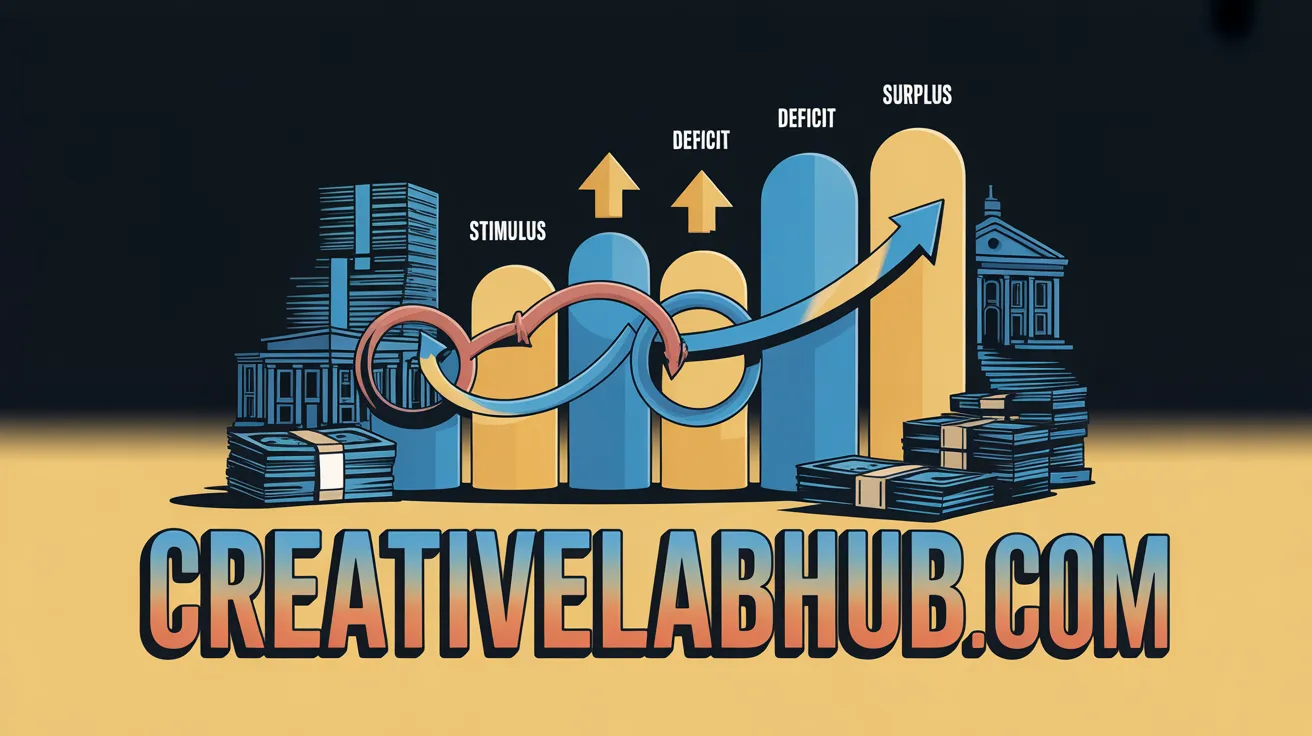
High Government Expenditures Can Lead to a Bigger Revenue, Stimulus, Deficit, and Surplus: The Surprising Truth In 2026
Introduction
Have you ever wondered why governments keep spending even when they are already deep in debt? It seems counterintuitive at first. You borrow more, you spend more, and somehow things are supposed to get better. But here is the thing: high government expenditures can lead to a bigger revenue, stimulus, deficit, and surplus all at once, depending on how you look at it and when you look at it.
This is not just economic theory. It is something that plays out in real government budgets every single year around the world. Whether it is the United States rolling out a massive infrastructure bill, Germany investing in green energy, or Pakistan building motorways, public spending shapes the economy in ways most people never fully understand.
In this article, you will learn exactly how government spending works, how it connects to revenue, what role stimulus plays, and why deficits do not always mean disaster. You will also learn when a surplus is actually achievable and what it signals. Let us break it all down in plain language.
What Does “High Government Expenditures” Actually Mean?
Government expenditures refer to all the money a government spends on goods, services, salaries, infrastructure, social programs, defense, and debt repayments. When expenditures are described as “high,” it means the government is spending a large portion of its gross domestic product (GDP).
Most developed economies spend between 35 percent and 55 percent of their GDP through government channels. The United States federal government, for example, spent over 6.1 trillion dollars in fiscal year 2023. That is a staggering number, and it touches almost every part of economic life.
High spending does not automatically mean irresponsibility. Sometimes it reflects a deliberate choice to invest in public goods that the private sector would never fund on its own.

Categories of Government Spending
- Mandatory spending: Social Security, Medicare, pensions
- Discretionary spending: Defense, education, transportation
- Interest payments: Debt servicing costs on borrowed money
How High Government Expenditures Can Lead to a Bigger Revenue
Here is the core economic idea that surprises most people. When the government spends money, that money does not disappear. It circulates through the economy. Workers get paid, businesses earn revenue, consumers buy more products, and companies hire more staff. All of that activity generates taxable income.
This is the foundation of Keynesian economics, named after British economist John Maynard Keynes. His central argument was simple: high government expenditures can lead to a bigger revenue, stimulus, deficit, and surplus by jump-starting economic activity during downturns.
When the government spends one dollar on a construction project, that dollar pays a worker. That worker buys groceries. The grocery store restocks its shelves. The supplier ships more goods. Each transaction generates tax revenue. Economists call this the fiscal multiplier effect.
The Fiscal Multiplier in Action
Research from the International Monetary Fund (IMF) shows that the fiscal multiplier for government spending in advanced economies ranges from 0.9 to 1.7 during recessions. That means every dollar spent can generate up to 1.70 dollars in economic output. During the 2008 financial crisis, the U.S. stimulus package of 787 billion dollars under the American Recovery and Reinvestment Act helped prevent a deeper depression and ultimately boosted tax revenues in the years that followed.
So yes, high government expenditures can lead to a bigger revenue, stimulus, deficit, and surplus because spending fuels growth, and growth fuels revenue.
The Role of Stimulus: Why Governments Spend During Crisis
A fiscal stimulus is government spending or tax cuts designed to boost economic activity. Think of it as a shot of adrenaline for a struggling economy. When private sector demand falls, governments step in to fill the gap.
You saw this on a historic scale during the COVID-19 pandemic. The U.S. government alone injected over 5 trillion dollars into the economy between 2020 and 2021 through direct payments, business loans, expanded unemployment benefits, and healthcare spending. Other countries did the same proportionally.
The result? Unemployment in the U.S. fell from nearly 15 percent in April 2020 to under 4 percent by 2022. GDP rebounded sharply. Corporate profits recovered. Tax collections surged. High government expenditures can lead to a bigger revenue, stimulus, deficit, and surplus when applied strategically, even if the short-term picture looks alarming.
Types of Fiscal Stimulus
- Direct transfers: Cash payments to households
- Public investment: Roads, bridges, schools, hospitals
- Tax cuts: Reducing the burden on businesses and individuals
- Subsidies: Supporting industries deemed critical to recovery
Understanding the Deficit: The Misunderstood Side of Spending
A budget deficit occurs when a government spends more than it collects in revenue during a fiscal year. Deficits get a lot of bad press, and sometimes for good reason. But context matters enormously here.
Running a deficit to fund a war or to pay for wasteful programs is problematic. Running a deficit to build high-speed rail, fund research universities, or modernize healthcare infrastructure is an investment in future productivity. The return on that investment can exceed the cost of borrowing.
Consider Japan. It has one of the highest debt-to-GDP ratios in the world, exceeding 260 percent. Yet Japan has maintained social stability, technological leadership, and a functioning economy. This is because a significant portion of its debt is owed to its own citizens and financed at near-zero interest rates.
When Is a Deficit Dangerous?
A deficit becomes dangerous when interest payments consume an increasingly large share of the budget, when borrowing is in foreign currency, when inflation accelerates beyond control, or when investor confidence collapses. But none of these conditions automatically follow from high spending.
The phrase high government expenditures can lead to a bigger revenue, stimulus, deficit, and surplus is not a contradiction. It describes the full arc of fiscal policy: spend intelligently, generate growth, collect more taxes, and eventually return to balance.
The Surplus: Can High Spending Ever Lead to a Budget Surplus?
A budget surplus occurs when government revenue exceeds its expenditures. Surpluses are rare but achievable. And ironically, they often follow periods of strategic high spending.
The United States ran budget surpluses from 1998 to 2001 under President Clinton. This came after years of investment in technology infrastructure and a booming economy that generated massive tax revenues. The seeds of that surplus were planted during periods of active government involvement in the economy.
Norway provides an even more striking example. The Norwegian government has accumulated a sovereign wealth fund worth over 1.4 trillion dollars by strategically investing oil revenues. It spends heavily on education, healthcare, and infrastructure, yet consistently reports budgetary surpluses.
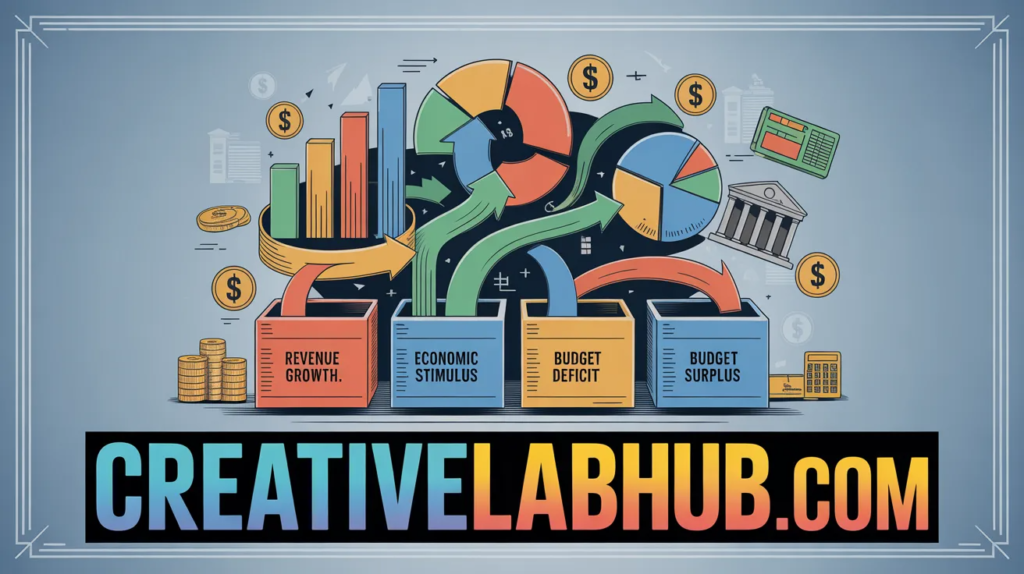
The Path from Spending to Surplus
- Government spends heavily on productive infrastructure
- Economic activity accelerates and employment rises
- Tax revenues increase significantly
- Social spending needs decrease as poverty and unemployment fall
- Budget moves from deficit toward surplus
The Real Relationship Between Spending, Debt, and Growth
One of the biggest debates in economics is whether government debt “crowds out” private investment. Critics argue that when governments borrow heavily, interest rates rise and businesses find it harder to get capital. This is a legitimate concern, but it is not universal.
In countries with strong institutions, low inflation, and deep capital markets, governments can borrow at low rates without squeezing out private investment. The evidence from the 2010s is particularly revealing. Despite massive government borrowing in the wake of the 2008 crisis, interest rates in the U.S., Europe, and Japan remained historically low for over a decade.
Research by economists like Lawrence Summers has argued for “secular stagnation,” suggesting that in modern economies, there is actually a shortage of productive investment opportunities. In this environment, government spending fills a critical gap.
This is why so many experts conclude that high government expenditures can lead to a bigger revenue, stimulus, deficit, and surplus in the right macroeconomic environment.
What History Tells Us: Real-World Examples
The New Deal (1933 to 1939)
Franklin D. Roosevelt’s New Deal remains one of the most studied examples of fiscal stimulus in history. Facing Great Depression unemployment rates of 25 percent, the U.S. government launched massive public works programs. The economy did not fully recover until World War II military spending, but the New Deal stabilized it and laid groundwork for postwar prosperity.
Germany’s Post-War Wirtschaftswunder
West Germany’s economic miracle of the 1950s and 1960s combined strategic public investment with smart fiscal policy. The government invested heavily in industrial infrastructure and education. The result was one of the fastest periods of economic growth in modern history, turning a devastated country into Europe’s largest economy.
China’s Infrastructure Push (2000 to Present)
China’s state-driven infrastructure investment program has been the largest in human history. High government expenditures built highways, high-speed rail, airports, and digital infrastructure. GDP grew at an average of nearly 9 percent per year for two decades, and tax revenues expanded dramatically alongside the broader economy.
The Risks You Cannot Ignore
It would be intellectually dishonest to talk about government spending without addressing the very real risks. High expenditures do not always lead to good outcomes. Zimbabwe and Venezuela serve as cautionary tales of unchecked government spending financed by money printing, which led to hyperinflation and economic collapse.
Greece’s debt crisis of 2010 showed what happens when government spending is funded by cheap foreign borrowing without corresponding investment in economic productivity. When creditors lost confidence, the results were devastating.
The difference between successful and disastrous high spending boils down to a few key factors: the quality of institutions, the purpose of spending, the financing mechanism, and the underlying strength of the economy.
Key Conditions for Successful High Expenditure Policy
- Spending must be directed at productive, revenue-generating projects
- Financing must be sustainable, ideally through domestic borrowing
- Institutions must be strong enough to prevent corruption and waste
- Monetary policy must complement fiscal policy to control inflation
How This Applies to You as a Citizen and Taxpayer
Understanding that high government expenditures can lead to a bigger revenue, stimulus, deficit, and surplus empowers you to think more critically about political debates. When you hear politicians talk about “cutting spending to reduce debt,” you now know that in some economic conditions, cutting spending can actually reduce revenue and deepen deficits by slowing growth.
Equally, when politicians promise that spending more will automatically solve problems, you know that the quality and purpose of that spending matters enormously. A dollar spent on building a school has different economic consequences than a dollar spent on a bloated bureaucracy.
I think the most important takeaway here is this: the relationship between government spending and economic outcomes is not black and white. It requires careful analysis of context, timing, quality, and institutional capacity.
Conclusion: The Big Picture on Government Spending
You have now seen the full picture. High government expenditures can lead to a bigger revenue, stimulus, deficit, and surplus at different stages of the economic cycle. It is not a paradox. It is how modern economies function.
When governments spend wisely on productive investments, they trigger growth through the multiplier effect. That growth generates taxes. Those taxes build surpluses over time. Along the way, stimulus programs prevent recessions from becoming depressions, and deficits serve as temporary bridges between investment and return.
The key word in all of this is “wisely.” Spending for spending’s sake leads to debt without growth. But strategic, evidence-based public investment in infrastructure, education, healthcare, and technology has historically been one of the most powerful drivers of national prosperity.
So the next time you hear a debate about government budgets, ask yourself: is this spending an investment or a waste? That single question separates policy that builds lasting wealth from policy that merely delays inevitable problems. What does your government’s current spending plan look like to you?

Frequently Asked Questions (FAQs)
1. How can high government spending increase revenue?
Government spending circulates through the economy via the multiplier effect. Workers earn wages, businesses generate profits, and all of that economic activity produces taxable income. If the fiscal multiplier exceeds 1.0, every dollar spent generates more than one dollar of GDP, which ultimately produces more tax revenue.
2. What is a fiscal stimulus and when is it used?
A fiscal stimulus is deliberate government spending or tax reduction aimed at boosting economic activity. Governments typically use it during recessions, financial crises, or periods of high unemployment to prevent economic contraction from spiraling further.
3. Is a budget deficit always bad?
No. A budget deficit is a tool, not automatically a problem. Deficits used to fund productive investment can yield long-term returns that exceed borrowing costs. The danger arises when deficits are structural, financed unsustainably, or fund consumption rather than investment.
4. Can a country achieve a surplus after years of deficit spending?
Yes. The United States achieved surpluses from 1998 to 2001 following years of economic growth partly fueled by earlier public investments in technology. Norway maintains surpluses while spending heavily on public services through its sovereign wealth fund model.
5. What is the fiscal multiplier?
The fiscal multiplier measures how much GDP changes in response to a change in government spending. A multiplier of 1.5 means that a one-dollar increase in spending produces 1.50 dollars of economic output. Multipliers tend to be higher during recessions and when interest rates are near zero.
6. Does government spending cause inflation?
Spending can cause inflation if it exceeds the economy’s productive capacity. However, during recessions with high unemployment and idle resources, the inflationary risk of fiscal stimulus is considerably lower. The key is matching the scale of spending to the available slack in the economy.
7. What is the difference between a deficit and national debt?
A deficit is the annual shortfall between spending and revenue. National debt is the accumulated total of all past deficits minus surpluses. Think of the deficit as a single year’s overspending, and the national debt as the running balance on a credit card built up over many years.
8. Which countries have successfully used high spending to grow their economies?
The United States through the New Deal and postwar investment, Germany through its postwar economic miracle, South Korea through state-directed industrial policy in the 1960s to 1980s, and China through its infrastructure investment drive are all prominent examples of high government spending producing sustained economic growth.
9. What role does tax policy play alongside government spending?
Tax policy and spending policy are two sides of the same fiscal coin. Tax cuts can act as stimulus just as spending increases can. The combination of smart taxation and targeted spending creates the conditions for the virtuous cycle described throughout this article.
10. How does high government expenditure affect ordinary people?
It affects you through job creation, better public services, infrastructure quality, and the overall health of the economy in which you work and save. When governments invest effectively, wages tend to be higher, unemployment lower, and public goods like roads, schools, and hospitals are of better quality.
Also read In Creativelabhub.com
Email: johanharwen314@gmail.com
Author Name: Johan harwen
About the Author: John Harwen is an economist, policy analyst, and financial writer with over 15 years of experience covering macroeconomics, public finance, and government fiscal strategy. He has contributed to leading economic publications and think tanks across North America and Europe. John holds a Master’s degree in Economics from the London School of Economics and is passionate about making complex financial concepts accessible to everyday readers. His work focuses on the intersection of fiscal policy, economic development, and public well-being.