

Meta Stock Earnings: Powerful Results, Alarming Spending Surge 2026
Introduction
If you follow Meta stock earnings, April 29, 2026 handed you a complicated night. The company smashed every number Wall Street threw at it. Revenue. Earnings per share. Ad growth. All of it came in above expectations. Yet Meta shares still dropped sharply after hours. That kind of contradictory result is exactly why earnings season keeps investors on edge.
Meta reported Q1 2026 revenue of $56.31 billion, a 33% jump year over year. EPS landed at $10.44, blowing past the $6.65 forecast. By almost every traditional measure, this was a standout quarter. But one number in the report overshadowed everything else — the company’s capital expenditure guidance for the full year, which jumped to a staggering $125 billion to $145 billion range.
In this article, you will get a clear breakdown of the Q1 2026 results, what drove the stock’s negative reaction, how Meta’s advertising engine is performing, and what the AI spending surge actually means for long-term investors. Let’s get into it.
Q1 2026 Results: What Meta Actually Reported
Revenue and Earnings Beat by a Wide Margin
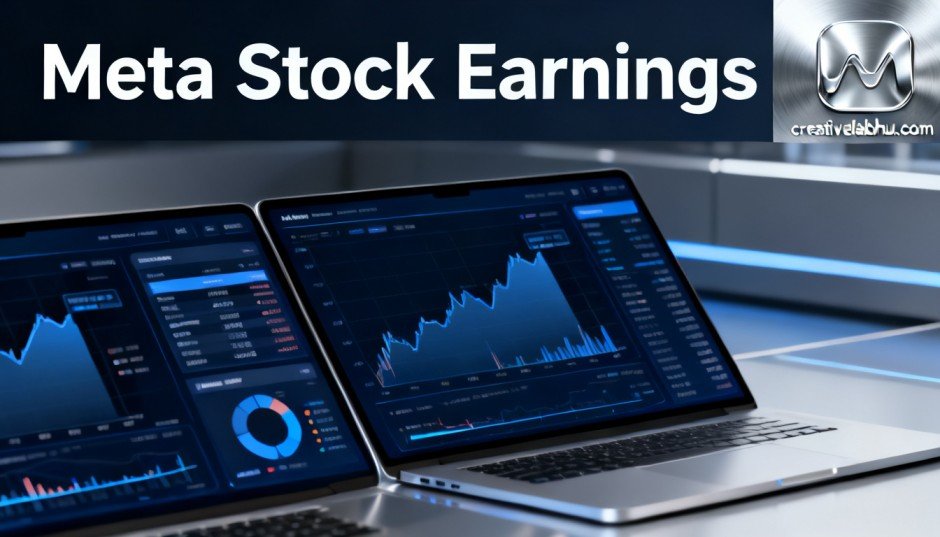
Meta’s Q1 2026 numbers were not just good — they were extraordinary on the surface.
- Revenue hit $56.31 billion, up 33% year over year
- EPS came in at $10.44, against a forecast of just $6.65
- Net income reached $26.77 billion, up 61% year over year
- Operating income was $22.87 billion at a 41% operating margin
These are strong numbers by any standard. Revenue growth of 33% at Meta’s scale is impressive. The EPS beat of nearly 57% over estimates looks huge, though it included an $8.03 billion one-time tax benefit tied to U.S. Treasury Notice 2026-7. Strip that out, and the beat narrows, but the underlying business performance still held up well.
The Ad Engine Is Firing on All Cylinders
Meta’s core money-maker is advertising. And in Q1 2026, that engine ran at full speed.
- Ad impressions across Meta’s Family of Apps grew 19% year over year
- Average price per ad rose 12% year over year
- Q2 revenue guidance came in at $58 to $61 billion
Both ad volume and ad pricing grew at the same time. That dual growth is the healthiest signal possible for Meta’s advertising business. It tells you that demand from advertisers is strong, and that Meta’s AI-powered ad targeting is delivering better results for those advertisers.
User Numbers: Growth With a Caveat
Family daily active people (DAP) — the metric that captures how many people use at least one Meta app every day — came in at 3.56 billion for the March 2026 average. That is a 4% increase year over year.
However, this was a slight sequential decline from the 3.58 billion reported in Q4 2025. Meta explained the dip with two specific factors: internet disruptions in Iran and restricted access to WhatsApp in Russia. These are geopolitical factors outside the company’s control, but any slowdown in user growth will catch investor attention when the stock trades at a premium.
Why Did Meta Stock Drop After Crushing Earnings?
This is the question every investor is asking. How does a company beat EPS by 57% and still see its stock fall?
The answer is capital expenditures.
The Capex Shock That Rattled Investors
Meta raised its full-year 2026 capex guidance to $125 billion to $145 billion, up from the prior range of $115 billion to $135 billion. That is a $10 billion increase at both ends of the range. The company cited higher component pricing and additional data center costs as the drivers.
To put this in perspective, Meta spent $72.22 billion on capex in all of 2025. Now it is guiding to spend nearly double that in 2026. That kind of spending hike, even in the name of AI infrastructure, unsettles investors who want to see returns on that investment before approving more spending.
Shares dropped more than 6% in after-hours trading following the report, and fell over 8% in premarket trading the following morning.
The Beat-and-Raise Trap
Wall Street has a term for what happened here. When a company beats earnings estimates but raises its spending guidance aggressively, the stock can still trade lower. Investors are not just rewarding the past quarter. They are pricing the future. A massive capex raise signals that costs will stay elevated, which compresses future margins and free cash flow.
Q1 2026 free cash flow was weaker than expected precisely because of this dynamic. The company’s operating activities generated strong cash, but the infrastructure investment is eating into free cash flow rapidly.
Meta’s AI Bet: Bold Vision or Reckless Spending?
What $125 to $145 Billion Buys You
Meta is not spending this money randomly. CEO Mark Zuckerberg has a clear vision. In his Q1 statement, he called it a “milestone quarter” and said the company is “on track to deliver personal superintelligence to billions of people.”
The spending funds:
- Meta Superintelligence Labs, which released its first proprietary model this quarter (Muse Spark)
- Data center expansion across the United States and globally
- MTIA Gen 2 chips, Meta’s custom AI accelerator co-developed with Broadcom on a 2-nanometer process
- AI-powered ad targeting improvements that directly feed revenue
The MTIA chip story is particularly interesting. Meta is building its own AI silicon to reduce dependence on Nvidia and lower long-term inference costs. But this is a 2027 story at the earliest. The capex bill is a 2026 reality. That timing gap is what worries near-term investors.
Reels: The Engagement Machine Still Churning
One of the clearest wins in the Q1 report was Reels. Management confirmed that ranking improvements drove a 10% increase in Reels time spent on Instagram. On Facebook, total video watch time grew more than 8% globally in Q1 — the largest quarterly gain in four years.
This matters for two reasons. First, higher engagement means more ad inventory. Second, Reels ad formats are still maturing, which means there is room to increase ad load and pricing without degrading the user experience. The Reels monetization gap compared to its older ad formats still represents meaningful revenue upside.
WhatsApp Business: The Next Revenue Frontier
Click-to-WhatsApp ads and WhatsApp Business messaging continue to grow. Management highlighted business messaging as the next leg of monetization, especially in markets where conversational commerce is already mainstream. Think Southeast Asia, Latin America, and India. These are high-engagement, undermonetized markets where WhatsApp dominates communication.
Threads is also quietly moving toward monetization. Meta launched its first-look ad surface on Threads during Q1, though management has not yet quantified its revenue contribution.
Reality Labs: Still Bleeding, But the Losses Narrowed
Reality Labs — Meta’s virtual and augmented reality segment — posted $402 million in revenue and a $4.03 billion operating loss in Q1 2026. The loss did narrow slightly from $4.21 billion a year ago, but this segment continues to be the most visible financial drag on the company.
The market largely expects Reality Labs to burn cash for years. Most long-term bulls discount this segment entirely and focus on the Family of Apps advertising machine. But the losses are real, and they do weigh on reported margins.
Full Year 2026 Outlook: What Comes Next
Revenue Guidance Looks Solid
Meta guided Q2 2026 revenue to a range of $58 to $61 billion. That represents continued strong year-over-year growth and suggests the advertising business is not slowing down. The midpoint of guidance implies roughly 14 to 17% growth over Q2 2025.
Full-year total expenses remain guided at $162 to $169 billion, unchanged from the prior outlook. Management continues to promise that 2026 operating income will exceed 2025 operating income, which came in at $83.28 billion.
The Analyst View: Still Mostly Bullish
Despite the stock drop, analyst sentiment on Meta remains overwhelmingly positive. Heading into the Q1 report, 42 of 50 analysts covering the stock had a Buy rating. Zero had a Sell. The consensus price target implied significant upside from current levels.
The bull case rests on three pillars:
- The advertising engine keeps growing through AI optimization
- AI infrastructure spending eventually generates new revenue streams beyond ads
- Meta’s valuation is the lowest among Magnificent 7 stocks on a forward price-to-earnings basis
At roughly 19.5x forward P/E, Meta does offer more valuation cushion than peers like Nvidia or Amazon.
Key Risks Every Investor Should Watch
No earnings breakdown would be complete without an honest look at the risks. Here are the ones that matter most for Meta stock right now.
Regulatory headwinds remain serious. Meta is navigating multiple U.S. trials around youth-related issues in 2026. The European Union’s scrutiny of Less Personalized Ads continues. Either could produce a material financial impact.
Geopolitical disruptions affected user numbers this quarter. The situation in Iran cut off internet access for a meaningful user base. The conflict’s ongoing impact on supply chains and oil prices is also raising component costs — the exact factor Meta cited for its capex revision.
Capex discipline will be watched closely every quarter. If Meta raises spending guidance again without showing concrete monetization of AI products, investor patience will wear thin.
Reality Labs losses continue to mount with no clear path to profitability. At over $4 billion in operating losses per quarter, this segment demands a better long-term narrative.
Historical Context: How Meta Got Here
Understanding the Q1 2026 report requires some context. Meta has now beaten EPS estimates in at least four consecutive quarters. Over the past five earnings releases, the stock moved an average of 3.22%, with mostly positive reactions.
In Q4 2025, Meta posted revenue of $59.89 billion, up 23.78% year over year, and EPS of $8.88, beating expectations. Ad impressions rose 18% and price per ad rose 6%. Family DAP hit 3.58 billion. That was the quarter that produced a 10% after-hours stock surge.
The full year 2025 showed operating cash flow of $115.80 billion and free cash flow of $43.59 billion. Meta closed 2025 with $81.59 billion in cash, cash equivalents, and marketable securities. It also carried $58.74 billion in long-term debt — a balance worth monitoring as interest rates affect debt servicing costs.
The company ended 2025 with 78,865 employees, a 6% year-over-year increase. Headcount growth has been deliberate and measured compared to the painful layoff cycles of 2022 and 2023.
The Bottom Line for Investors

Meta stock earnings for Q1 2026 delivered a genuine beat on every financial metric that matters. Revenue grew 33%. EPS surged 62% year over year. Advertising is healthy. AI products are launching. The platform still reaches over 3.5 billion people every single day.
The problem is not what Meta earned. The problem is what Meta plans to spend. A capex range of $125 to $145 billion in a single year is a massive bet on AI infrastructure. That bet will either look prescient in 2027 when custom chips lower inference costs and new AI revenue streams emerge, or it will look reckless if those returns do not materialize.
The long-term thesis for Meta remains intact. The company generates enormous cash, dominates digital advertising, and is building AI capabilities that could reshape its business model. But the near-term stock reaction reflects a market that needs to see results, not just roadmaps, before rewarding that level of spending.
Are you positioned for Meta’s long-term AI payoff, or are you more cautious about the rising spend? Share your take — it is one of the most interesting investor debates in tech right now.
Frequently Asked Questions
1. What were Meta’s Q1 2026 earnings results? Meta reported Q1 2026 revenue of $56.31 billion, up 33% year over year. EPS came in at $10.44, well above the forecast of $6.65. Net income hit $26.77 billion, boosted partly by an $8.03 billion one-time tax benefit.
2. Why did Meta stock fall after strong Q1 2026 earnings? Meta raised its full-year 2026 capex guidance to $125 to $145 billion, up from the prior $115 to $135 billion range. That $10 billion spending increase alarmed investors worried about margin compression and free cash flow, sending the stock down more than 6% in after-hours trading.
3. How many daily active users does Meta have? Meta’s Family daily active people (DAP) averaged 3.56 billion in March 2026, a 4% year-over-year increase. The slight sequential decline from 3.58 billion in Q4 2025 was attributed to internet disruptions in Iran and WhatsApp restrictions in Russia.
4. What is Meta spending all this money on? Meta is investing heavily in AI infrastructure, including data centers, its custom MTIA Gen 2 AI chip (co-developed with Broadcom), and Meta Superintelligence Labs, which launched its first AI model this quarter.
5. How is Meta’s advertising business performing? Very well. Ad impressions grew 19% year over year in Q1 2026. Average price per ad rose 12%. Both metrics accelerating simultaneously signals strong advertiser demand and effective AI-powered ad targeting.
6. What is Meta’s revenue guidance for Q2 2026? Meta guided Q2 2026 revenue to a range of $58 to $61 billion, implying continued double-digit year-over-year growth.
7. What is Reality Labs, and is it profitable? Reality Labs is Meta’s VR and AR segment covering products like Quest headsets and Ray-Ban smart glasses. It posted $402 million in Q1 2026 revenue and a $4.03 billion operating loss. It is not profitable and is not expected to be in the near term.
8. When is Meta’s next earnings report? Meta’s next earnings report is scheduled for July 29, 2026, covering Q2 2026 results.
9. What do analysts say about Meta stock right now? Analyst sentiment is overwhelmingly bullish. Before the Q1 report, 42 of 50 covering analysts had a Buy rating with zero Sells. The consensus price target implied significant upside from current trading levels around $630 to $670.
10. Is Meta undervalued compared to other big tech stocks? At approximately 19.5x forward price-to-earnings, Meta trades at the lowest valuation among the Magnificent 7 group of mega-cap tech stocks. Many analysts view this as a relative opportunity, especially given the company’s strong cash generation and advertising growth trajectory.
Author Bio: Jordan Mills is a financial writer and market analyst with over eight years of experience covering technology stocks, earnings reports, and investment strategy. He breaks down complex financial data into clear, actionable insights for everyday investors. His work focuses on big tech, AI infrastructure, and digital advertising trends.
Also read creativelabhub.com
Email: johanharwen314@gmail.com
Author Name: Johan Harwen