

SEO Mistakes: The Ultimate On-Page SEO Checklist for 2026
Understanding SEO Mistakes
Search Engine Optimization (SEO) is a crucial aspect of digital marketing that can significantly influence a website’s visibility and success. However, many website owners and marketers often fall prey to common SEO mistakes that can severely hinder their online performance. Understanding these errors is essential for developing an effective strategy to enhance on-page SEO, especially as we move into 2026.
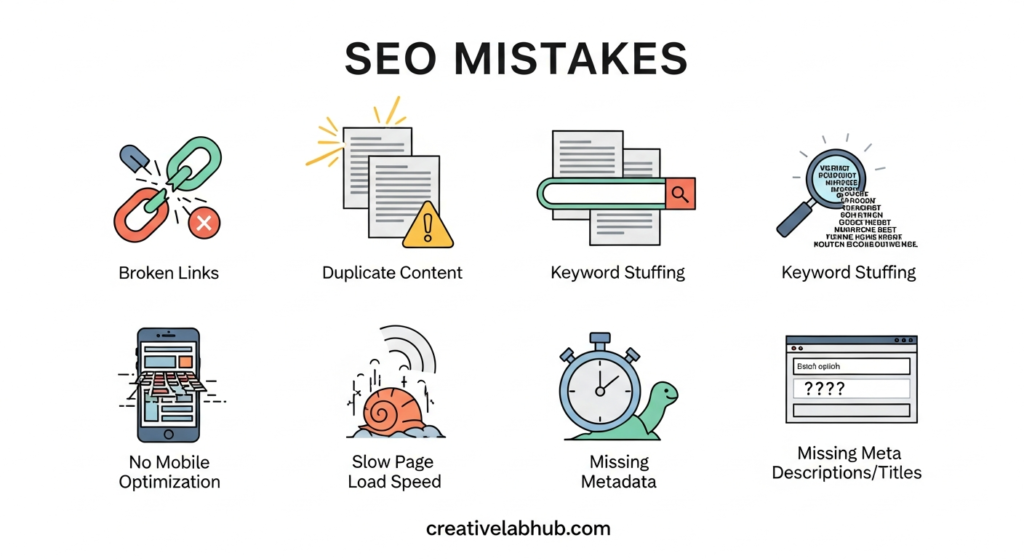
One prevalent mistake is neglecting proper keyword research. Keywords are fundamental to connecting with target audiences, and using poorly chosen or outdated keywords can lead to low search engine rankings and decreased traffic. Additionally, over-optimization of content with the same keywords can lead to keyword stuffing, which is penalized by search engines, further damaging a website’s performance.
Another significant oversight in on-page SEO is poor content quality. Content must be engaging, relevant, and provide value to the reader. SEO strategies that prioritize keyword density over quality often result in high bounce rates, as users leave if they find the content uninteresting or irrelevant. Furthermore, neglecting meta tags and alt attributes can prevent search engines from accurately indexing a website, ultimately affecting its likelihood to appear in search results.
Many website owners also fail to optimize for mobile devices. With the majority of searches now conducted on mobile platforms, a website that is not mobile-friendly will struggle to rank well in search results, consequently limiting its traffic and reach. Lastly, ignoring page speed improvements can have a detrimental impact. Slow-loading pages lead to frustrating user experiences and increased bounce rates, signaling to search engines that the site may not be providing the value users expect.
Addressing these common mistakes is critical for achieving strong on-page SEO and ensuring that a website can compete effectively in the ever-evolving digital landscape of 2026.
Key Elements of On-Page SEO in 2026
As digital marketing continuously evolves, understanding the key elements of on-page SEO becomes increasingly crucial for effective search engine optimization strategies. In 2026, several fundamental components continue to play vital roles in enhancing visibility and user experience on websites.
First, meta tags remain essential. These HTML elements provide concise descriptions of web pages and influence click-through rates from search results. Specifically, the title tag and meta description should be optimized with relevant keywords while maintaining an engaging appeal to elicit user interest. Well-crafted meta tags not only improve ranking but also help align the content with user intent.
Next, headers (H1, H2, H3, etc.) serve as structural guides for both search engines and visitors, facilitating better readability. These elements should incorporate keywords relevant to the content, ensuring a logical flow that enhances comprehension. Headers not only categorize the information but also help search engines understand the hierarchy of content.
Image optimization is another major component of on-page SEO. Properly formatted images with descriptive alt text and reduced file sizes enhance page load speed while providing context to search engines regarding visual content. This leads to better ranking in image searches and overall page performance.
The URL structure is equally important. Clean, descriptive URLs that incorporate relevant keywords can improve search engine rankings and user understanding of the page content. Implementing a logical hierarchy within URLs promotes better indexing by search engines.
Lastly, internal linking enhances the user experience by guiding visitors to related content throughout the site. This strategic approach ensures that users spend more time on the website, while also distributing authority across pages, which is favorable for SEO. Inadequate attention to these critical on-page elements may result in missed opportunities, thus underscoring the importance of a thorough on-page SEO strategy in 2026.
Top SEO Mistakes to Avoid
In the realm of search engine optimization (SEO), overlooking fundamental practices can significantly hamper a website’s online performance. Many webmasters and content creators commonly make certain mistakes that can prove detrimental to their SEO efforts. Understanding these pitfalls is crucial for improving visibility and rankings.
One prevalent mistake is keyword stuffing. While incorporating keywords is essential for search engine algorithms, overusing them can lead to penalization. A natural flow in the content, alongside strategic keyword integration, is paramount. Instead of cluttering the text with excessive repetitions, focus on varying synonyms and related terms, which can enhance readability and engagement.
Another critical error is the production of poor quality content. Search engines prioritize valuable, well-researched articles that provide meaningful insights to users. When content lacks depth or relevance, it not only fails to attract visitors but may also lead to higher bounce rates. Ensuring that content is original, informative, and well-structured encourages user interaction and fosters a positive site experience.
Slow loading times can also negatively affect a website’s ranking. In today’s fast-paced digital environment, users expect instant access to information. If a website takes too long to load, visitors are likely to abandon it, leading to increased bounce rates. Utilizing tools to analyze and improve loading speed is vital for maintaining a competitive edge.
Finally, improper use of headings can result in confusion for both users and search engines. Headings serve as a roadmap for content, allowing readers to quickly identify sections of interest. Utilizing hierarchical structure with H1, H2, and H3 tags appropriately ensures that search engines can better understand the content’s organization, enhancing the chances of indexing and ranking higher.
Implementing the SEO Checklist for 2026
To effectively implement the SEO checklist for 2026, it is crucial to start with a thorough audit of your current SEO practices. This process entails evaluating various aspects of your website, including keyword usage, meta descriptions, header tags, and alt texts for images. Tools such as Google Search Console, SEMrush, or Ahrefs can provide valuable insights into existing performance metrics, pointing out areas that require improvement.
Once you have identified the elements that need adjustment, prioritize the necessary corrections based on their potential impact on search engine visibility and user experience. For instance, addressing technical issues such as page speed and mobile responsiveness should take precedence, as these factors significantly affect both SEO rankings and overall user satisfaction. Additionally, refreshing outdated content with relevant keywords and updating links can also enhance your site’s authority and relevance.
Tracking improvements is another critical component of implementing the SEO checklist effectively. By establishing clear performance indicators, such as organic traffic, bounce rate, and conversion rates, you can measure the success of your SEO efforts over time. Regularly monitoring these metrics will help you identify trends and make informed decisions regarding future optimizations. Additionally, consider scheduling periodic evaluations of your SEO strategy to ensure continued alignment with the latest best practices.
Lastly, the evolving landscape of SEO underscores the importance of continuous learning and adaptation. Keep abreast of industry changes, algorithm adjustments, and new tools by engaging with SEO communities, attending webinars, or following key thought leaders in the field. This proactive approach will not only aid in addressing the checklist for 2026 but will also empower you to maintain an effective and robust SEO strategy moving forward.