
Amazing Axial Skeleton: Your Body’s Central Support System 2026
Introduction
Have you ever wondered what keeps your body upright and protects your most vital organs? The answer lies in your axial skeleton—the remarkable central framework that forms the foundation of your entire body structure.
Your axial skeleton is like the main pillar of a building. Without it, you’d literally collapse. This incredible system consists of 80 bones running down the middle of your body, creating a protective shield around your brain, spinal cord, heart, and lungs.
Think about it. Right now, as you’re reading this, your axial skeleton is working tirelessly to keep you stable, protect your organs, and allow you to breathe. It’s not just sitting there passively—it’s actively supporting every move you make.
In this comprehensive guide, we’ll explore everything about the axial skeleton. You’ll discover its structure, understand its critical functions, learn about common conditions that affect it, and find practical tips to keep it healthy. Whether you’re a student, fitness enthusiast, or simply curious about your body, this article will give you valuable insights into this essential framework.
What Is the Axial Skeleton?
The axial skeleton forms the central axis of your body. It’s one of two major divisions of your skeletal system, with the other being the appendicular skeleton (your limbs and their attachments).
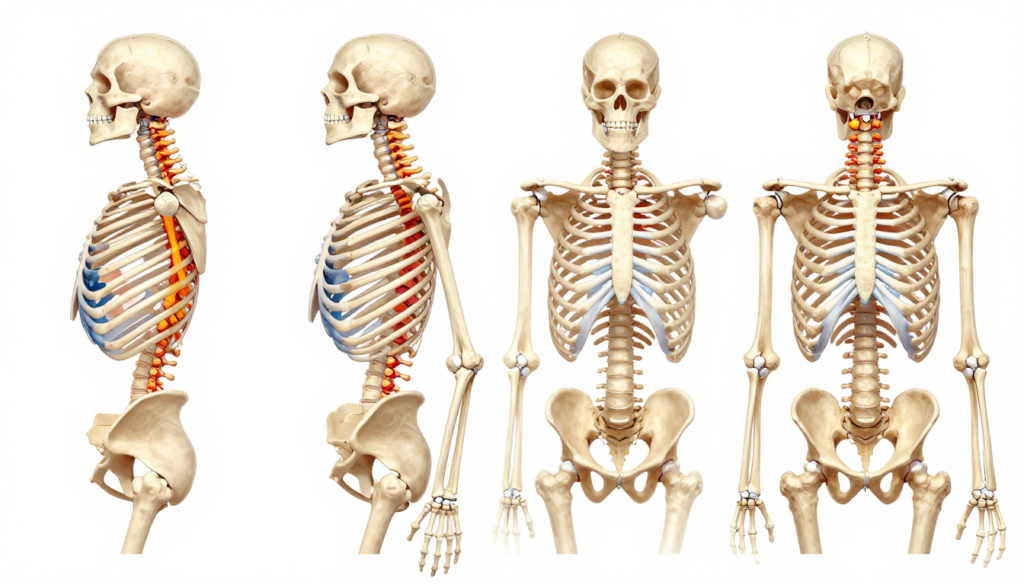
Your axial skeleton contains exactly 80 bones. These bones are organized into three main regions: the skull, the vertebral column, and the thoracic cage. Each region plays a unique role in protecting your organs and supporting your body’s structure.
Why Is It Called “Axial”?
The term “axial” comes from “axis,” meaning the central line around which something rotates. Your axial skeleton literally forms the central line of your body. It runs from the top of your head down through your spine to your pelvis.
This central positioning isn’t random. The axial skeleton’s location allows it to serve as the anchor point for your entire body. Your appendicular skeleton (arms and legs) attaches to it, creating a complete system that enables movement.
The Three Main Components of the Axial Skeleton
Let’s break down the axial skeleton into its three major parts. Understanding each component will help you appreciate how this system works as a unified whole.
1. The Skull (22 Bones)
Your skull is a masterpiece of biological engineering. It consists of 22 bones that fit together like a complex puzzle.
The skull divides into two main sections:
- Cranium (8 bones): This forms the protective case around your brain. The cranial bones include the frontal, parietal (2), temporal (2), occipital, sphenoid, and ethmoid bones.
- Facial bones (14 bones): These create the structure of your face. They include your nasal bones, maxilla, zygomatic bones (cheekbones), mandible (jawbone), and others.
Your skull bones are mostly connected by immovable joints called sutures. These tight connections create a strong, protective helmet for your brain. The only exception is your mandible, which forms a movable joint allowing you to chew and speak.
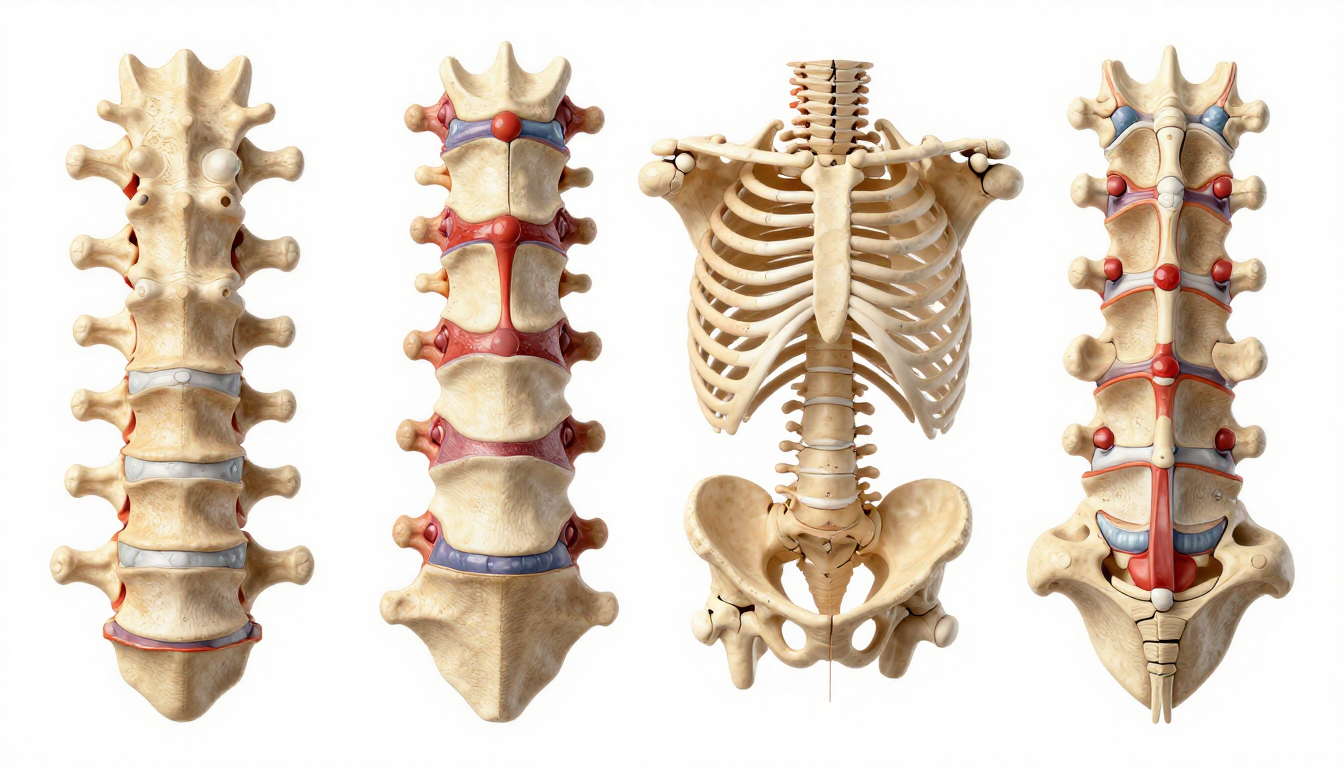
2. The Vertebral Column (26 Bones)
Your vertebral column, commonly called your spine, is the backbone of the axial skeleton—literally. It contains 26 bones when you count the fused vertebrae as single units.
Here’s the breakdown:
- Cervical vertebrae (7 bones): These form your neck and support your skull.
- Thoracic vertebrae (12 bones): These attach to your ribs in your upper and mid-back.
- Lumbar vertebrae (5 bones): These large vertebrae support your lower back.
- Sacrum (1 fused bone from 5 vertebrae): This triangular bone connects your spine to your pelvis.
- Coccyx (1 fused bone from 3-5 vertebrae): Your tailbone, a remnant from our evolutionary past.
Each vertebra has a hollow center that creates the spinal canal. Your spinal cord runs through this protected channel, sending signals between your brain and the rest of your body.
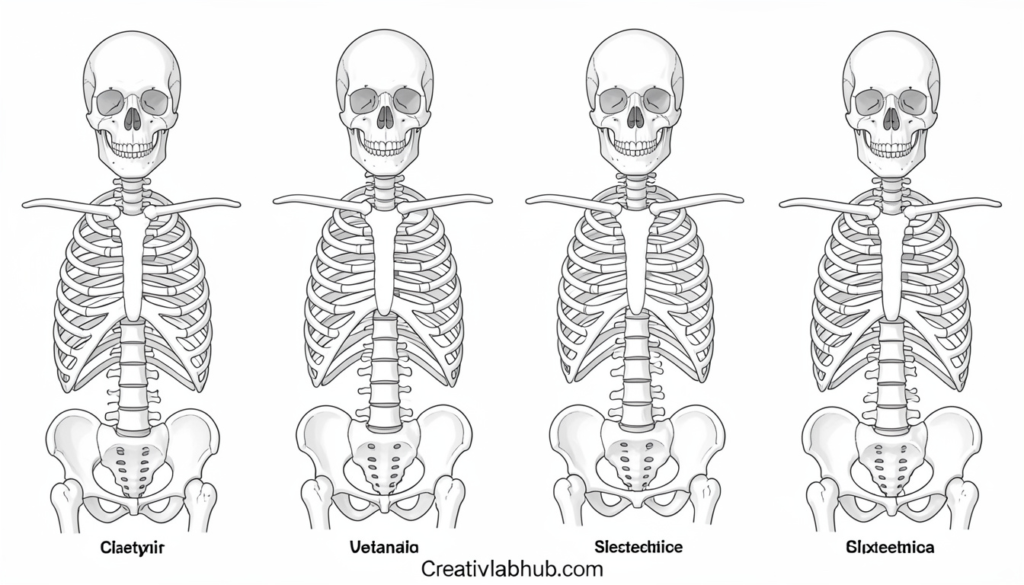
3. The Thoracic Cage (25 Bones)
Your thoracic cage, or rib cage, forms a protective shield around your heart and lungs. It consists of 25 bones total.
The components include:
- Ribs (24 bones): You have 12 pairs of ribs. The first 7 pairs are “true ribs” that connect directly to your sternum. Pairs 8-10 are “false ribs” that connect indirectly. Pairs 11-12 are “floating ribs” that don’t connect to the sternum at all.
- Sternum (1 bone): Your breastbone forms the front anchor point for your rib cage.
Your thoracic cage isn’t rigid—it’s designed to expand and contract as you breathe. This flexibility is essential for lung function while maintaining protection for your vital organs.
Additional Components: The Auditory Ossicles and Hyoid Bone
Some anatomists include a few additional bones in the axial skeleton count, bringing the total to 80 bones.
Auditory Ossicles (6 Bones)
Inside each ear, you have three tiny bones: the malleus, incus, and stapes. These six bones (three per ear) are the smallest in your body. They transmit sound vibrations from your eardrum to your inner ear, making hearing possible.
Hyoid Bone (1 Bone)
The hyoid bone is unique—it’s the only bone in your body that doesn’t connect to any other bone. It floats in your neck, supported by muscles and ligaments. This U-shaped bone anchors your tongue and helps with swallowing and speech.
Functions of the Axial Skeleton
Your axial skeleton isn’t just a structural framework. It performs several critical functions that keep you alive and functional.
Protection of Vital Organs
The primary job of your axial skeleton is protection. Your skull shields your brain from impact. Your vertebral column protects your spinal cord. Your thoracic cage guards your heart and lungs.
This protection is literally life-saving. Even minor damage to organs like your brain or heart can be fatal. The axial skeleton creates a hard barrier that absorbs impacts and prevents injuries.
Support and Posture
Your axial skeleton gives your body its basic shape and supports your weight. Your vertebral column acts like a flexible rod that keeps you upright against gravity.
Good posture depends entirely on your axial skeleton’s alignment. When your vertebrae stack properly, you stand tall with minimal muscle effort. Poor alignment forces your muscles to work harder, leading to fatigue and pain.
Movement and Flexibility
While protection is crucial, your axial skeleton also enables movement. Your spine can bend, twist, and flex in multiple directions. The joints between your vertebrae allow for this controlled movement while maintaining stability.
Your rib cage expands and contracts with every breath. This movement is essential for pulling air into your lungs and pushing it out.
Blood Cell Production
Many bones in your axial skeleton contain red bone marrow. This soft tissue produces red blood cells, white blood cells, and platelets—the components of your blood.
Your sternum, ribs, vertebrae, and skull bones are major sites of blood cell production throughout your life. This makes your axial skeleton essential for your immune system and oxygen transport.
Mineral Storage
Your axial skeleton bones store calcium and phosphorus. These minerals are critical for many body functions, including muscle contraction and nerve signaling.
When your blood calcium levels drop, your body can pull calcium from your bones to maintain proper levels. This dynamic storage system helps regulate mineral balance throughout your body.
Common Conditions Affecting the Axial Skeleton
Like any body system, your axial skeleton can develop problems. Understanding these conditions helps you recognize symptoms and seek appropriate care.
Scoliosis
Scoliosis is an abnormal sideways curvature of the spine. Instead of running straight down your back, the vertebral column curves to the left or right.
Most cases develop during childhood or adolescence. Mild scoliosis might not cause symptoms, but severe curves can affect breathing and cause back pain. Treatment ranges from observation to bracing or surgery, depending on severity.
Kyphosis
Kyphosis creates an excessive forward curve in your thoracic spine, causing a hunched or rounded back. While some curvature is normal, excessive kyphosis can result from poor posture, osteoporosis, or developmental conditions.
You might know this condition as “dowager’s hump” when it occurs in older adults. Strengthening exercises and posture correction can help mild cases.
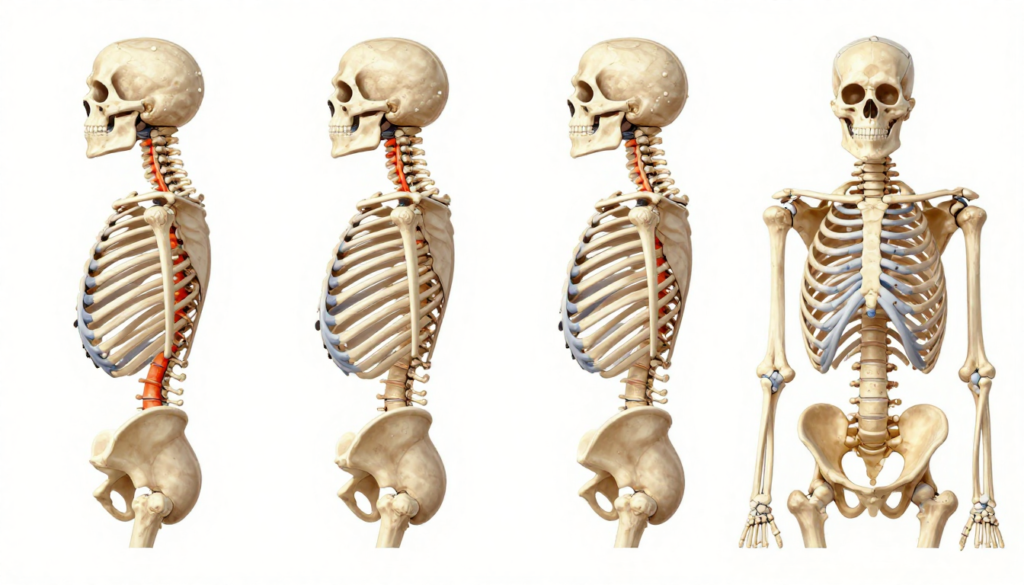
Lordosis
Lordosis is an exaggerated inward curve of your lumbar spine. Your lower back arches too much, pushing your abdomen and buttocks outward.
This condition can result from obesity, pregnancy, or weak core muscles. Physical therapy focusing on core strengthening often provides relief.
Osteoporosis
Osteoporosis weakens bones by reducing their density. Your axial skeleton bones become porous and fragile, increasing fracture risk.
This condition particularly affects postmenopausal women, though anyone can develop it. Vertebral compression fractures are common, causing pain, height loss, and spinal deformity. Calcium, vitamin D, and weight-bearing exercise help prevent osteoporosis.
Herniated Discs
Between your vertebrae sit cushioning discs made of cartilage. When a disc herniates, its soft inner material pushes through the tough outer layer.
Herniated discs can press on spinal nerves, causing pain, numbness, or weakness. The condition often affects the lumbar spine, leading to sciatica—pain radiating down your leg.
Spinal Stenosis
Spinal stenosis is a narrowing of the spinal canal. This puts pressure on your spinal cord and nerves.
The condition typically develops with age as degenerative changes occur. Symptoms include back pain, numbness, and difficulty walking. Treatment options range from physical therapy to surgery.
Fractures
Axial skeleton fractures can occur from trauma or osteoporosis. Skull fractures are particularly serious due to potential brain injury. Vertebral fractures can damage the spinal cord.
Rib fractures are painful and can affect breathing. Most heal on their own, but severe cases may require surgical intervention.
How to Keep Your Axial Skeleton Healthy
Your axial skeleton needs proper care throughout your life. These practical strategies will help you maintain strong, healthy bones.
Nutrition for Bone Health
Your bones need specific nutrients to stay strong:
- Calcium: Dairy products, leafy greens, and fortified foods provide this essential mineral. Adults need 1,000-1,200 mg daily.
- Vitamin D: This vitamin helps your body absorb calcium. Get it from sunlight, fatty fish, or supplements. Aim for 600-800 IU daily.
- Protein: Your bones are partly made of protein. Include lean meats, beans, and nuts in your diet.
- Magnesium and vitamin K: These support bone metabolism. Find them in nuts, whole grains, and vegetables.
Exercise Regularly
Weight-bearing exercise strengthens your axial skeleton. Activities like walking, jogging, dancing, and resistance training stimulate bone formation.
I recommend at least 30 minutes of weight-bearing exercise most days. Yoga and Pilates also benefit your spine by improving flexibility and core strength.
Swimming and cycling are excellent for cardiovascular health, but they don’t stress your bones enough to promote density. Combine them with weight-bearing activities for best results.
Maintain Good Posture
Poor posture stresses your axial skeleton unnecessarily. When sitting, keep your back straight and shoulders relaxed. Your computer screen should be at eye level.
Stand tall with your weight evenly distributed on both feet. Imagine a string pulling the top of your head toward the ceiling. This visualization helps maintain proper spinal alignment.
Protect Against Injury
Wear appropriate safety gear during sports and physical activities. Use helmets for biking, skating, or contact sports to protect your skull.
Practice proper lifting techniques to protect your spine. Bend at your knees, keep the load close to your body, and avoid twisting while lifting.
Get Regular Check-ups
Regular medical check-ups can identify axial skeleton problems early. Bone density scans can detect osteoporosis before fractures occur.
If you experience persistent back pain, numbness, or changes in posture, consult a healthcare provider. Early intervention often prevents serious complications.
Avoid Smoking and Excessive Alcohol
Smoking reduces blood flow to your bones and interferes with calcium absorption. It significantly increases osteoporosis risk.
Excessive alcohol consumption also weakens bones and increases fracture risk. Limit intake to moderate levels—one drink per day for women, two for men.
The Axial Skeleton Through Different Life Stages
Your axial skeleton changes throughout your life. Understanding these changes helps you provide age-appropriate care.
Infancy and Childhood
Babies are born with about 270 bones, many more than adults. As they grow, many bones fuse together.
An infant’s skull bones aren’t fully fused, leaving soft spots called fontanelles. These allow the skull to compress during birth and accommodate rapid brain growth. The fontanelles typically close by age two.
Childhood is crucial for building bone density. Good nutrition and physical activity during these years establish a foundation for lifelong skeletal health.
Adolescence
During puberty, rapid bone growth occurs. This is the peak time for building bone mass. Most people achieve their maximum bone density by their late twenties.
The growth plates in vertebrae close during late adolescence. This is why conditions like scoliosis are often monitored closely during this period.
Adulthood
In adulthood, your axial skeleton maintains its density through a process called remodeling. Old bone tissue is constantly broken down and replaced with new tissue.
Maintaining bone health during these years prevents problems later. Weight-bearing exercise and adequate nutrition are essential.
Older Adulthood
After age 30, bone density gradually decreases. This process accelerates in women after menopause due to reduced estrogen levels.
The vertebral discs lose water content, causing height loss. The spine may develop more pronounced curves. Osteoporosis becomes a significant concern.
Staying active and maintaining good nutrition become even more critical during this stage. Falls become more dangerous, so balance exercises and home safety modifications are important.
Interesting Facts About the Axial Skeleton
Here are some fascinating details about your axial skeleton that might surprise you:
- Your spine has natural curves—cervical and lumbar curves arch forward (lordotic), while thoracic and sacral curves arch backward (kyphotic). These curves help distribute weight and absorb shock.
- You’re taller in the morning than at night. Throughout the day, gravity compresses your spinal discs, making you up to 1 cm shorter by evening.
- The stapes bone in your ear is the smallest bone in your body, measuring only 2-3 mm long.
- Your skull bones are remarkably strong. The human skull can withstand about 520 pounds of force before fracturing.
- You have the same number of cervical vertebrae (7) as a giraffe, despite their much longer necks.
Conclusion
Your axial skeleton is truly amazing—a complex system of 80 bones that protects, supports, and enables your body to function. From your skull guarding your brain to your vertebral column housing your spinal cord and your thoracic cage protecting your heart and lungs, every component works together seamlessly.
Understanding your axial skeleton empowers you to take better care of it. Through proper nutrition, regular exercise, good posture, and injury prevention, you can maintain strong, healthy bones throughout your life.
Remember, your axial skeleton isn’t just a static framework—it’s a living, dynamic system that adapts and responds to how you treat it. Give it the care it deserves, and it will continue supporting you for decades to come.
What steps will you take today to strengthen your axial skeleton? Start with small changes, and your body will thank you.
Frequently Asked Questions (FAQs)
1. How many bones are in the axial skeleton?
The axial skeleton contains 80 bones. This includes 22 skull bones, 26 vertebral column bones (counting fused vertebrae), 24 ribs, 1 sternum, 6 auditory ossicles, and 1 hyoid bone.
2. What is the difference between the axial and appendicular skeleton?
The axial skeleton forms the central axis of your body (skull, spine, ribs). The appendicular skeleton includes your limbs and the bones that attach them to the axial skeleton (shoulders and pelvis). Together, they contain 206 bones in adults.
3. Can you strengthen your axial skeleton?
Yes, you can strengthen your axial skeleton through weight-bearing exercise, resistance training, and proper nutrition. Consuming adequate calcium and vitamin D, combined with regular physical activity, increases bone density and strength.
4. What causes back pain in the axial skeleton?
Back pain can result from muscle strain, herniated discs, arthritis, spinal stenosis, or poor posture. Sometimes, conditions like osteoporosis or scoliosis contribute to pain. If you experience persistent back pain, consult a healthcare provider for proper diagnosis.
5. How does aging affect the axial skeleton?
As you age, bone density decreases, particularly after age 30. Intervertebral discs lose water content, potentially causing height loss. The risk of osteoporosis increases, especially in postmenopausal women. Regular exercise and good nutrition help minimize these effects.
6. What protects the spinal cord?
The vertebral column protects your spinal cord. Each vertebra has a hollow center creating the spinal canal, through which your spinal cord runs. This bony tunnel shields the delicate nervous tissue from injury.
7. Why is the hyoid bone unique?
The hyoid bone is the only bone in your body that doesn’t connect to any other bone. It floats in your neck, held in place by muscles and ligaments. This unique positioning allows it to support your tongue and assist with swallowing and speech.
8. Can scoliosis be corrected?
Treatment depends on severity and age. Mild scoliosis may only require monitoring. Moderate cases might benefit from bracing, especially in growing children. Severe scoliosis may require surgical correction. Physical therapy and specific exercises can help manage symptoms.
9. What foods are best for axial skeleton health?
Calcium-rich foods like dairy products, leafy greens, and fortified plant milks support bone health. Fatty fish provides vitamin D. Protein sources like lean meats, beans, and nuts are also important. Don’t forget foods rich in magnesium and vitamin K, like nuts and vegetables.
10. How can I improve my posture?
Practice awareness of your body position throughout the day. When sitting, keep your back straight and shoulders relaxed. Strengthen your core muscles through exercises like planks. Take regular breaks from sitting. Consider ergonomic furniture that supports proper alignment.
Also Read : Fake Labubu