
The Ultimate Guide: What to Feed Ducks Safely 2026
Introduction
Have you ever stood by a pond with a bag of bread crumbs, ready to feed the ducks, only to wonder if you’re actually doing more harm than good? You’re not alone. For generations, families have been tossing bread to ducks, thinking it’s a harmless tradition. But here’s the truth: what to feed ducks matters more than you might think.
Feeding ducks the wrong food can lead to serious health problems, habitat destruction, and even death. The good news? You can still enjoy this delightful activity—you just need to know what to feed ducks properly. In this guide, I’ll walk you through everything you need to know about duck nutrition. You’ll discover the healthiest food options, learn what to avoid, and understand why proper feeding matters for these beloved waterfowl.
Let’s dive in and make sure your next duck-feeding adventure is both fun and safe.
Why What You Feed Ducks Actually Matters
The Hidden Dangers of Improper Feeding
When you feed ducks the wrong foods, you’re not just giving them a poor meal. You’re potentially contributing to serious environmental and health issues. Bread, for example, lacks the essential nutrients ducks need to thrive. It’s like eating junk food every day—eventually, your health suffers.
Ducks that consume too much bread can develop a condition called “angel wing.” This deformity causes their wings to twist outward, preventing them from flying. For wild ducks, this means they can’t migrate, escape predators, or find suitable habitats. It’s a life sentence.
Beyond individual health, improper feeding affects entire ecosystems. Leftover bread and unhealthy foods rot in the water. This decomposition depletes oxygen levels, harming fish and aquatic plants. It also attracts rats, encourages algae blooms, and creates unsanitary conditions. What seems like a kind gesture can turn a pristine pond into a polluted mess.
Understanding what to feed ducks isn’t just about being a responsible visitor. It’s about protecting wildlife and preserving natural habitats for future generations.
The Best Foods: What to Feed Ducks for Optimal Health
Specially Formulated Duck Pellets
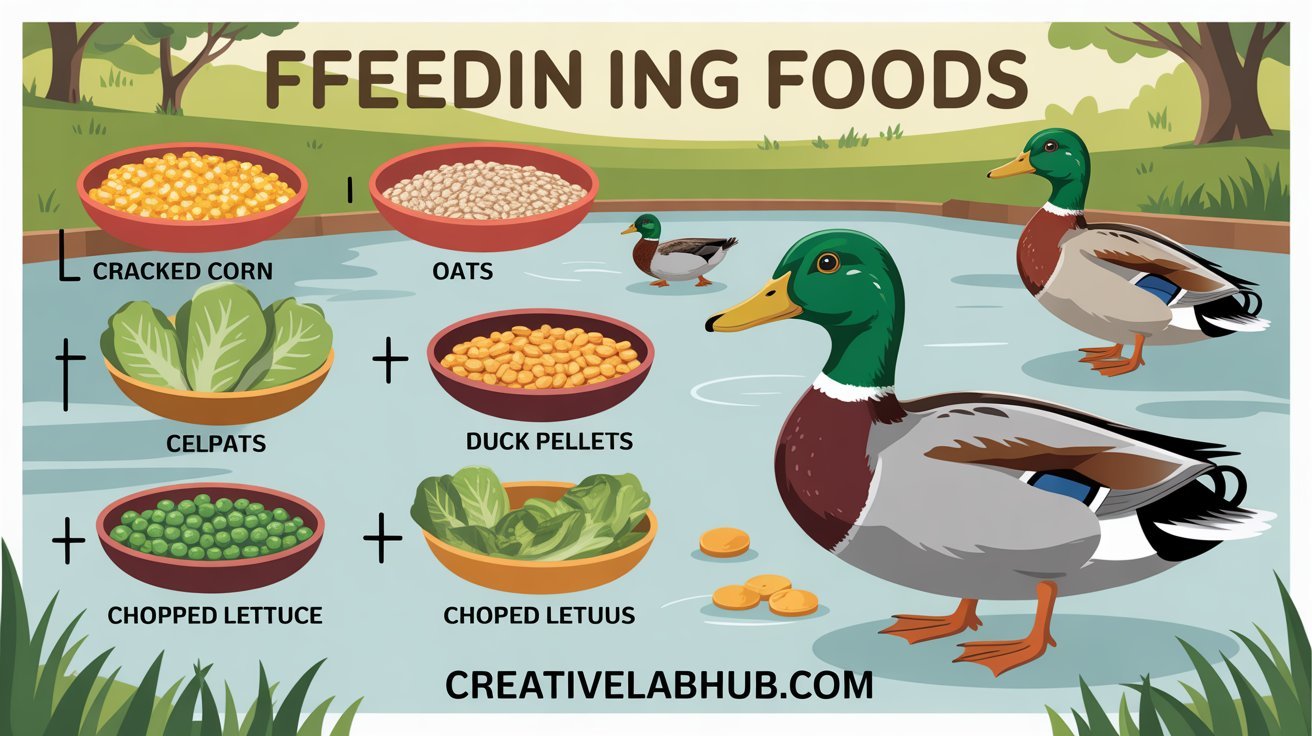
If you want the absolute best option for what to feed ducks, commercial duck pellets top the list. These pellets are scientifically formulated to provide complete nutrition. They contain the right balance of proteins, vitamins, and minerals that ducks need.
You can find duck pellets at farm supply stores, pet stores, or online retailers. They’re affordable, easy to carry, and the ducks love them. I’ve watched ducks go crazy for these pellets—they know quality food when they taste it.
The pellets float on water, making them easy for ducks to eat without wasting food. They also don’t pollute the water like bread does. If you’re serious about duck welfare, keep a bag of these pellets in your car.
Fresh Vegetables: Nature’s Perfect Snack
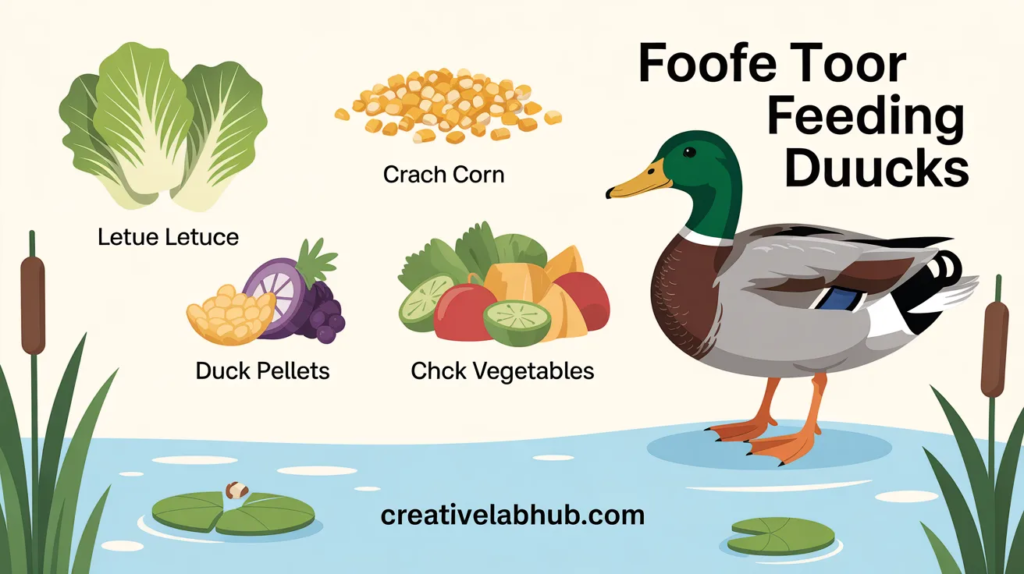
Ducks are omnivores, and they naturally forage for plant material in the wild. Fresh vegetables make an excellent choice for what to feed ducks. Here are some top options:
- Lettuce (chopped): Romaine, green leaf, or iceberg all work well
- Peas (defrosted): Frozen peas are perfect once thawed
- Corn (whole kernel or cut off the cob): Fresh or canned without salt
- Chopped cabbage: Great roughage for their digestive system
- Cucumber slices: Hydrating and nutritious
- Oats (uncooked): Regular rolled oats, not instant
Chop vegetables into small, manageable pieces. Ducks don’t have teeth, so they need food they can easily swallow. I like to bring a small container of mixed veggies when I visit my local pond. The variety keeps things interesting for both the ducks and me.
Grains and Seeds: Energy-Packed Options
Whole grains provide excellent energy for ducks. When considering what to feed ducks, these options deliver solid nutrition:
- Birdseed: Regular birdseed mixes work wonderfully
- Oats: Steel-cut or rolled oats are both great
- Barley: Whole or cracked barley provides good nutrition
- Wheat: Cracked wheat is easier for ducks to digest
- Rice (cooked or uncooked): Both forms are safe and nutritious
These grains mirror what ducks would naturally forage for in fields and wetlands. They’re calorie-dense, which helps ducks maintain their energy levels, especially during cold weather or migration periods.
Fruits: Sweet Treats in Moderation
Ducks enjoy fruits, but these should be occasional treats rather than staples. When you’re deciding what to feed ducks, consider these fruity options:
- Grapes (cut in half): Prevent choking hazards by slicing them
- Berries: Blueberries, strawberries, and raspberries are favorites
- Melon chunks: Watermelon and cantaloupe (remove seeds)
- Banana slices: High in potassium but very sugary
- Apple pieces: Remove seeds and core first
Fruits contain natural sugars, so moderation is key. Think of them as dessert—nice once in a while, but not the main course.
Foods to Absolutely Avoid: What Not to Feed Ducks
Bread: The Most Common Mistake
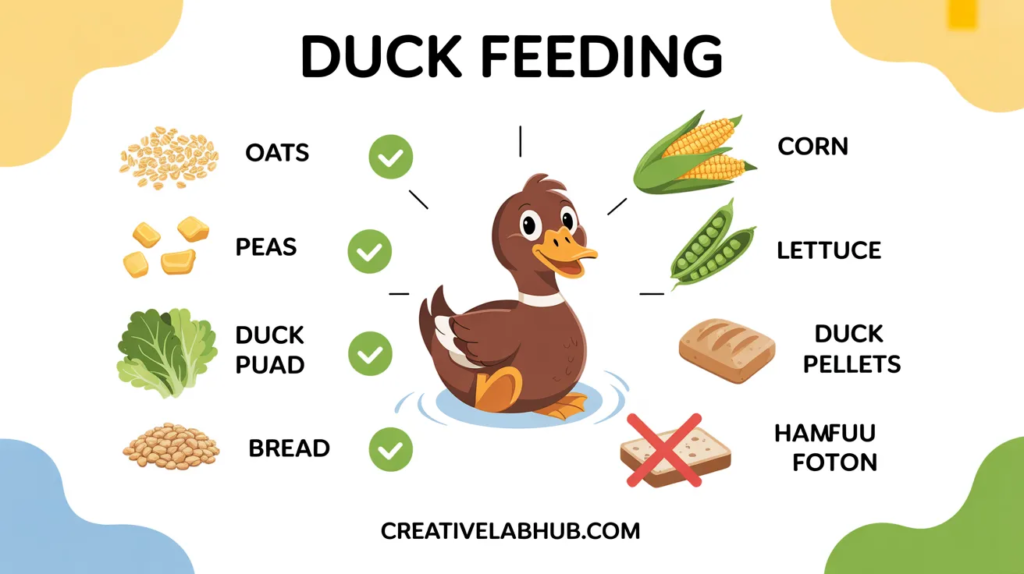
Let’s address the elephant in the room. Bread is the worst thing you can feed ducks. White bread, wheat bread, crackers, chips, donuts, and similar baked goods offer zero nutritional value. They fill ducks up without providing essential nutrients, leading to malnutrition.
The problems with bread extend beyond nutrition. Excess bread in water creates bacterial growth, attracts pests, and contributes to toxic algae blooms. Some wildlife organizations estimate that bread-related pollution contributes to the death of thousands of waterfowl annually.
I understand the tradition is hard to break. But once you see how enthusiastically ducks respond to healthy alternatives, you won’t miss the bread at all.
Other Dangerous Foods
When learning what to feed ducks, it’s equally important to know what to avoid:
- Junk food: Chips, popcorn, cookies, and candy cause serious health issues
- Moldy or spoiled food: Can be toxic and even fatal
- Avocado: Contains persin, which is poisonous to birds
- Onions and garlic: Cause digestive problems and anemia
- Citrus fruits: Too acidic for their digestive systems
- Salty foods: Ducks can’t process high sodium levels
- Raw meat or dairy products: Their digestive systems can’t handle these
If you wouldn’t feed it to a baby, don’t feed it to a duck. Keep it simple and stick to natural, wholesome options.
How Much and How Often: Feeding Guidelines
Portion Control Matters
Even with the best foods, overfeeding causes problems. When determining what to feed ducks and how much, follow these guidelines:
For a typical pond visit: Bring enough food for about 10-15 minutes of feeding. This might be a cup or two of pellets or vegetables for a small group of ducks. If the food disappears in under five minutes, you can add a bit more. If food remains after 10 minutes, you’ve brought too much.
Frequency: It’s fine to feed ducks regularly if you live near a pond, but they shouldn’t become dependent on handouts. Wild ducks need to maintain their natural foraging instincts. Limit supplemental feeding to a few times per week at most.
Feeding Techniques
How you present the food matters as much as what to feed ducks. Scatter food in shallow water or on the shoreline. This mimics natural foraging and prevents aggressive competition. Avoid creating feeding frenzies where dominant ducks monopolize all the food.
Never feed ducks by hand unless they’re domesticated. Wild ducks should maintain a healthy fear of humans for their own safety. Toss food a few feet away and let them come to it naturally.
Watch for aggressive behavior. If larger ducks or geese are bullying smaller birds, scatter food more widely to give everyone a fair chance.
Understanding Duck Nutrition and Dietary Needs
What Ducks Eat in the Wild
To truly understand what to feed ducks, it helps to know their natural diet. Wild ducks are opportunistic omnivores. Their diet includes:
- Aquatic plants and algae
- Insects, larvae, and worms
- Small fish and tadpoles
- Seeds and grains from grasses
- Roots and tubers
- Snails and crustaceans
This varied diet provides balanced nutrition. Different seasons offer different food sources, and ducks have adapted to be flexible eaters. When you supplement their diet, you’re simply adding to what they’d naturally forage.
Nutritional Requirements
Ducks need specific nutrients to stay healthy. Protein is essential for feather growth, muscle development, and egg production. They require 14-18% protein in their diet, which they get from insects, fish, and quality pellets.
Calcium and minerals support bone health and egg shell formation in female ducks. Vitamins A, D, and E play crucial roles in immune function and overall health. Carbohydrates provide energy for daily activities and temperature regulation.
When you choose what to feed ducks, aim for variety. Different foods provide different nutrients. A mixed diet ensures they’re getting everything they need.
Special Considerations for Different Duck Species
Domestic vs. Wild Ducks
The answer to what to feed ducks can vary slightly depending on whether you’re feeding wild or domestic ducks. Wild ducks, like mallards and wood ducks, are fully adapted to find their own food. Your contributions should be minimal supplements to their natural diet.
Domestic ducks, like Pekins or Muscovies, may be more dependent on human feeding if they live in urban parks. These ducks often have limited natural food sources. However, the same healthy food rules apply.
Ducklings Have Different Needs
If you encounter ducklings, remember they have special dietary requirements. Young ducklings need higher protein levels (18-20%) for proper growth. Commercial duckling starter feed is ideal if you’re caring for abandoned ducklings.
For wild ducklings with their mother present, don’t interfere with feeding. Mother ducks know exactly what to feed ducks babies—insects, tiny aquatic creatures, and soft plant materials. Observation is better than intervention.
Seasonal Feeding Tips
Winter Feeding Strategies
During cold months, ducks need extra calories to maintain body temperature. When deciding what to feed ducks in winter, focus on energy-rich foods. Increase the proportion of grains and seeds in your offerings.
Cracked corn is particularly valuable in winter because it’s calorie-dense and helps ducks generate body heat. Oats and wheat also provide good winter nutrition.
Make sure frozen ponds have access points where ducks can reach water. Never feed ducks exclusively on ice or snow-covered ground where food might be wasted or create hygiene issues.
Summer Considerations
In warm weather, ducks have abundant natural food sources. Your supplemental feeding should be lighter during summer months. Focus on hydrating foods like chopped lettuce and cucumber.
Be extra cautious about food spoilage in hot weather. Uneaten food can rot quickly and create health hazards. Bring smaller amounts and clean up any leftovers.
Environmental Impact and Responsible Feeding
Preventing Water Pollution
Every time you consider what to feed ducks, think about environmental impact. Food that sinks and decomposes uses up oxygen that fish and plants need. Excess nutrients fuel algae blooms that can kill entire pond ecosystems.
Choose foods that float and are quickly consumed. Duck pellets are designed to minimize waste. Vegetables and grains in appropriate amounts leave little residue.
If you notice leftover food after 15 minutes, collect what you can and dispose of it properly. Don’t leave it to rot in the water or attract pests.
Managing Duck Populations
Overfeeding can artificially inflate duck populations beyond what local habitats can naturally support. This leads to overcrowding, disease spread, and habitat degradation. When you feed responsibly—knowing what to feed ducks and in what amounts—you help maintain natural population balances.
Some parks and wildlife areas prohibit feeding altogether because of past problems with overfeeding. Always respect posted signs and local regulations. These rules exist to protect the very animals we want to help.
Where to Buy Duck-Friendly Food
Local and Online Resources
Finding what to feed ducks safely is easier than you might think. Farm supply stores like Tractor Supply or Rural King carry duck pellets year-round. Pet stores with bird sections often stock waterfowl feed.
Online retailers offer convenient options. Amazon, Chewy, and specialty bird supply websites deliver duck pellets right to your door. Buy in bulk if you feed ducks regularly—it’s more economical and reduces packaging waste.
Regular grocery stores provide all the vegetables, fruits, and grains you need. Stock up on frozen peas, lettuce, and oats during your weekly shopping. Keep a dedicated “duck bag” ready for spontaneous pond visits.
Budget-Friendly Options
You don’t need to spend a fortune on what to feed ducks. A 25-pound bag of duck pellets costs $15-25 and lasts for many feeding sessions. Buying produce on sale or choosing store brands keeps costs down.
Leftover vegetables from meal prep work perfectly. Those outer lettuce leaves you’d normally discard? Ducks love them. Slightly overripe fruits that you won’t eat? Perfect for ducks (in moderation).
Teaching Children About Responsible Duck Feeding
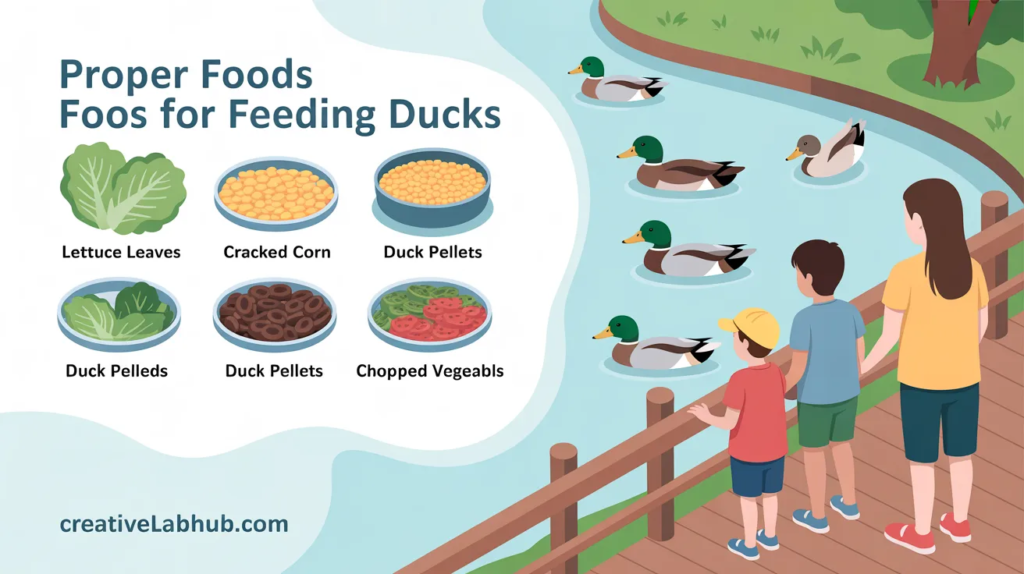
Making It Educational
Feeding ducks offers wonderful teaching opportunities. Show children what to feed ducks while explaining why certain choices matter. Discuss animal nutrition, ecosystems, and environmental stewardship.
Let kids help prepare the food before you visit the pond. They can tear lettuce, sort peas, or measure out pellets. This involvement creates investment in doing it right.
Observe duck behavior together. Point out how different ducks interact, how they swim and dive, and what they naturally eat from the pond. These observations make the learning experience richer.
Safety First
Teach children to respect wildlife boundaries. Feeding should never involve chasing, grabbing, or cornering ducks. Maintain appropriate distance and let ducks come to the food naturally.
Wash hands thoroughly after feeding ducks. Waterfowl can carry bacteria that cause illness in humans. Make handwashing a non-negotiable part of the duck-feeding routine.
Supervise young children near water at all times. Getting lost in the joy of feeding ducks shouldn’t mean forgetting water safety basics.
Common Myths About Feeding Ducks
Myth 1: “Ducks Love Bread, So It Must Be Fine”
Just because ducks eagerly eat bread doesn’t mean it’s good for them. Ducks will eat almost anything when they’re hungry. Their enthusiasm isn’t a reliable indicator of nutritional value. Understanding what to feed ducks means looking beyond their immediate response to the long-term health consequences.
Myth 2: “Feeding Ducks Helps Them Survive”
Healthy duck populations survive just fine without human intervention. In fact, overfeeding can harm their survival skills by making them dependent on handouts. Feed ducks to enjoy the experience and provide supplemental nutrition, not because you think they can’t make it without you.
Myth 3: “All Natural Foods Are Safe”
While natural whole foods are generally better than processed junk, not all natural foods are safe. Avocados are natural but toxic to ducks. Moldy natural grain can be deadly. Always research what to feed ducks before offering new foods.
Signs of Healthy vs. Unhealthy Ducks
What Healthy Ducks Look Like
When you’re feeding ducks regularly, monitor their health. Healthy ducks have smooth, well-groomed feathers with good color. They’re alert, active, and responsive to their environment. They swim vigorously and dive when appropriate.
Their bodies should appear well-proportioned without visible bone protrusion or excessive weight. Eyes should be clear and bright, not cloudy or discharge-filled. Breathing should be quiet and effortless.
Warning Signs
Unhealthy ducks display concerning symptoms. Listlessness, hunched posture, or reluctance to move suggest illness. Abnormal feather loss, matted plumage, or visible injuries require attention.
If you notice ducks with twisted wings (angel wing), difficulty swimming, or unusual behavior patterns, report your concerns to local wildlife authorities. Don’t attempt to treat or capture wild ducks yourself.
Understanding what to feed ducks properly helps prevent many health issues. But some problems require professional intervention.
Legal and Ethical Considerations
Local Regulations
Before feeding ducks anywhere, check local rules. Many parks have specific regulations about when, where, and what to feed ducks. Some locations ban feeding entirely due to overcrowding issues or environmental concerns.
Wildlife refuges and nature preserves typically prohibit feeding to maintain natural behaviors. Respect these rules—they’re based on scientific management principles designed to protect wildlife.
Feeding bread might even be illegal in some jurisdictions. Several cities and countries have banned bread feeding due to its harmful effects on waterfowl and ecosystems.
Ethical Feeding Practices
Beyond legal requirements, consider ethical implications. Are you feeding ducks for their benefit or your entertainment? The answer should always prioritize their wellbeing. Know what to feed ducks, when to feed them, and when to simply observe without interfering.
Don’t create dependency situations where ducks abandon natural foraging. Don’t feed so much that you alter local populations or create unsanitary conditions. Always leave the environment cleaner than you found it.
Alternative Ways to Enjoy Ducks
Observation Without Feeding
You don’t need to feed ducks to enjoy them. Bring binoculars and watch their natural behaviors. Observe how they interact, dive for food, and care for their young. Photography offers another engaging way to appreciate ducks without affecting their health or environment.
Many nature centers offer guided duck-watching programs. These educational experiences teach you about duck species, migration patterns, and ecology without the feeding component.
Supporting Duck Welfare Through Other Means
If you truly care about duck welfare, consider supporting organizations that protect wetlands and waterfowl habitats. Donate to conservation groups, participate in pond clean-up events, or advocate for environmental policies that protect water quality.
Plant native vegetation around local ponds to provide natural food sources. Support legislation that protects wetlands from development. These actions help ducks far more than any feeding session could.
Conclusion
Now you know exactly what to feed ducks safely and responsibly. Armed with this knowledge, you can transform a simple pond visit into an enriching experience that benefits both you and the waterfowl.
Remember the key takeaways: choose nutritious foods like duck pellets, vegetables, and whole grains; avoid bread and junk food; feed in moderation; and always consider environmental impact. When you follow these guidelines, you’re not just feeding ducks—you’re protecting ecosystems and promoting wildlife health.
Next time you plan a duck-feeding adventure, pack some frozen peas or pick up a bag of duck pellets. Watch how enthusiastically the ducks respond to quality nutrition. You’ll feel good knowing you’re doing right by these charming creatures.
What will you feed the ducks on your next visit? Share your healthy feeding experiences in the comments below!
Frequently Asked Questions
Q: Can ducks eat bread at all, or is it completely forbidden?
A: While small amounts of whole grain bread occasionally won’t kill ducks, there’s no nutritional benefit. It’s better to avoid bread entirely and choose healthier alternatives like pellets or vegetables. The “bread is bad” message exists because people historically fed ducks nothing but bread, leading to serious health problems.
Q: How do I know if I’m feeding ducks too much?
A: If food remains uneaten after 10-15 minutes, you’ve provided too much. Overfeeding attracts pests, pollutes water, and can make ducks dependent on handouts. Feed small amounts and watch how quickly it’s consumed. Healthy ducks should also be foraging naturally, not waiting by the shore for constant handouts.
Q: Is it safe to feed ducks in city parks?
A: Yes, as long as the park allows feeding and you follow proper guidelines about what to feed ducks. Urban ducks may rely more on supplemental feeding than rural ducks, making your contribution more significant. However, always check for posted signs about feeding restrictions before offering any food.
Q: Can I feed baby ducks (ducklings) the same foods as adult ducks?
A: Ducklings need higher protein content than adults. If you’re caring for domestic ducklings, use commercial duckling starter feed. For wild ducklings with their mother, don’t interfere—she knows what to feed them. If you must supplement, finely chopped lettuce and tiny bits of scrambled egg work in emergencies.
Q: What should I do if I see someone feeding ducks bread?
A: Approach politely and share what you’ve learned about what to feed ducks. Many people genuinely don’t know bread is harmful. Offer to share your healthy duck food if you have extra. Education works better than confrontation. You might inspire them to change their habits.
Q: Are store-bought birdseed mixes okay for ducks?
A: Yes! Regular birdseed mixes are excellent choices for what to feed ducks. They contain nutritious seeds and grains that ducks naturally forage for. Just avoid mixes with excessive filler or those marketed specifically for finches, which might be too small and specialized.
Q: Can ducks eat kitchen scraps?
A: Some kitchen scraps are fine, others aren’t. Vegetable peelings, leftover rice, plain cooked pasta, and oatmeal work well. Avoid anything seasoned, salty, sugary, or processed. When in doubt, stick to foods you know are safe rather than experimenting with scraps.
Q: How long does a bag of duck pellets last?
A: A 25-pound bag of duck pellets lasts several months for occasional feeders, or about a month if you feed ducks several times per week. Store pellets in a cool, dry place in an airtight container to prevent spoilage and pest problems.
Q: Do different duck species need different foods?
A: All duck species thrive on similar basic diets—seeds, grains, aquatic plants, and insects. Diving ducks eat more aquatic animals while dabbling ducks eat more plant material, but these differences come from natural foraging, not supplemental feeding requirements. The same healthy foods work for all species when you’re learning what to feed ducks.
Q: Can feeding ducks make them aggressive?
A: Overfeeding or hand-feeding can make ducks (and especially geese) associate humans with food too strongly, leading to aggressive begging behavior. Feed from a distance, scatter food widely, and never hand-feed wild waterfowl. This maintains appropriate boundaries and prevents aggressive conditioning.
Also Read : Feed In Braids