

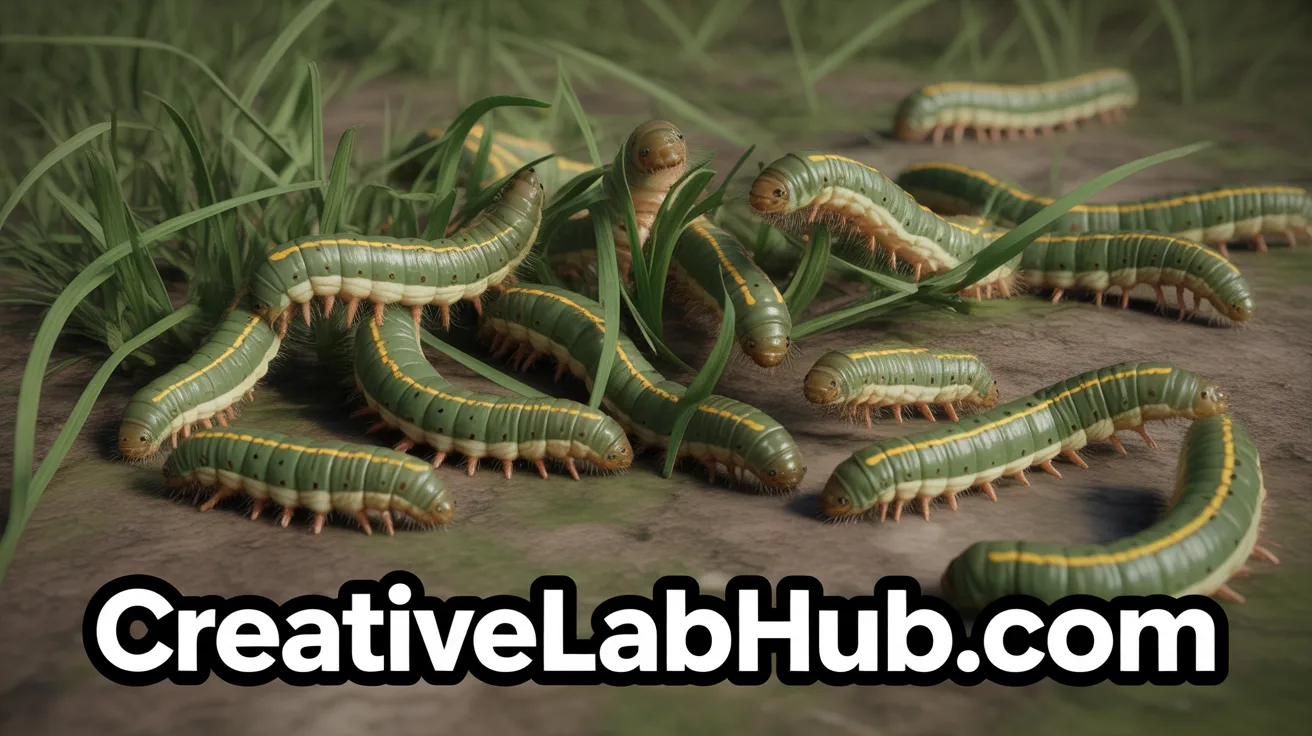
Army Worms: Powerful Threat or Manageable Pest 2026?
Introduction
Imagine waking up one morning, walking out to your lawn or farm, and finding that something has eaten through your grass or crops overnight. No warning. No obvious signs the day before. Just damage, everywhere. That is exactly what army worms do, and it happens faster than most people expect.
Army worms are one of the most destructive agricultural pests in the world. They do not travel alone. They move in large groups, which is exactly how they earned their name. These caterpillars can strip an entire field bare within days, leaving farmers and gardeners helpless if they are not prepared. Army worms affect grass, corn, wheat, sorghum, rice, and many other crops.
In this article, you will learn everything you need to know about army worms. We will cover what they are, how to identify them, why they spread so fast, and most importantly, how you can stop them before they cause serious damage.
What Are Army Worms and Why Are They So Dangerous
Army worms are the larvae of certain moth species, most commonly the fall armyworm (Spodoptera frugiperda) and the true armyworm (Mythimna unipuncta). They are not actually worms at all. They are caterpillars in their larval stage. But once you see what they can do to a field, the name starts to feel very accurate.
The reason army worms are so destructive is their behavior. They feed in groups. A single adult moth can lay hundreds of eggs at once. When those eggs hatch, the larvae spread outward like a slow-moving army, eating everything in their path. They are particularly dangerous in warm and humid climates, and their populations can explode rapidly after heavy rainfall.
According to the Food and Agriculture Organization of the United Nations, the fall armyworm alone has affected millions of hectares of crops across Africa, Asia, and the Americas. The economic losses run into billions of dollars every year. This is not a minor pest. Army worms are a serious global threat to food security.
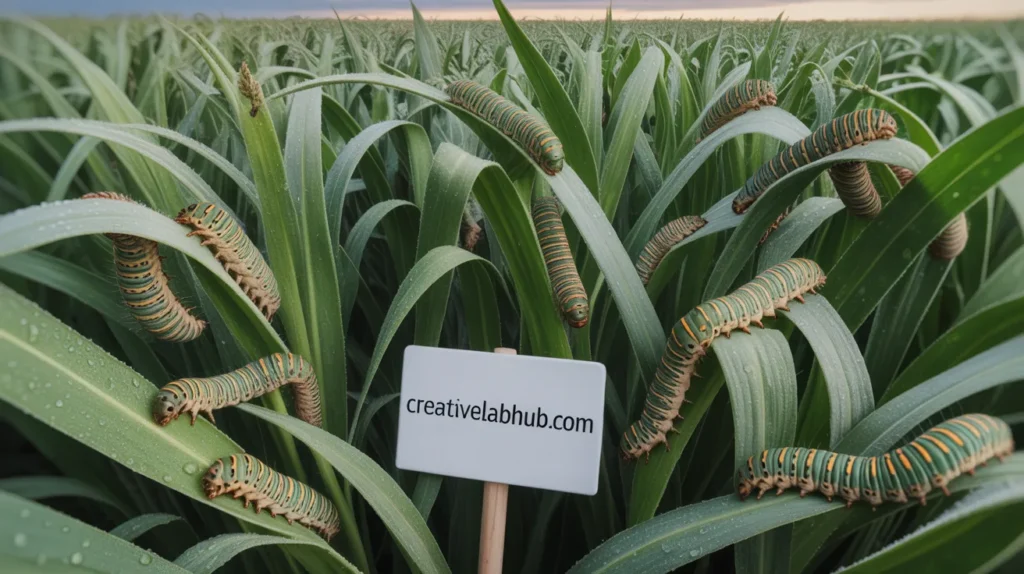
How to Identify Army Worms in Your Lawn or Farm
Early identification is the most powerful tool you have against army worms. The sooner you spot them, the easier they are to control. Here is what to look for.
The larvae of army worms are usually greenish when young and turn brown or dark gray as they grow. They can reach about 3 to 4 centimeters in length. One of the most recognizable features is a light-colored inverted Y-shape on the front of their head. Their bodies often have distinct stripes running along the sides.
You might notice the damage before you see the worms themselves. Army worms feed at night or during cloudy days. During bright sunshine, they hide in the soil or under plant debris. Signs of army worm damage include ragged or irregular chewing on leaves, bare patches in lawns, and plants that look like they have been stripped clean.
Here are some key signs that army worms may be present on your property:
Irregular brown patches appearing suddenly on your lawn. Bare or skeletonized leaves on corn or grass plants. Birds gathering on your field, since birds often feed on army worms. A close look at the soil near damaged plants reveals the larvae themselves. Grass that feels spongy underfoot because the roots have been damaged.
If you suspect army worms, go out at night with a flashlight and check the soil surface near damaged areas. You will likely find them feeding actively after dark.
The Life Cycle of Army Worms
Understanding the life cycle of army worms helps you time your treatments better. Army worms go through four stages: egg, larva, pupa, and adult moth.
The adult moth is gray or brown with a wingspan of about 3 to 4 centimeters. The females lay eggs in clusters of around 100 to 200 on leaves or other plant surfaces. The eggs hatch within 2 to 10 days depending on the temperature. Warmer conditions speed up the process significantly.
The larval stage is when army worms do all of their damage. This stage lasts about 14 to 30 days. The larvae go through six instars, or growth stages. During the early instars, they are small and cause minimal damage. By the later instars, army worms are large, hungry, and feeding aggressively around the clock.
After the larval stage, army worms burrow into the soil to pupate. They emerge as adult moths about 10 to 14 days later. The adults mate, lay eggs, and the cycle begins again. In tropical climates, army worms can complete multiple generations in a single year, which is why infestations can escalate so quickly.
Types of Army Worms You Should Know
Not all army worms are the same. There are several species, and knowing which one you are dealing with can help you choose the right treatment.
The fall armyworm is the most widespread and damaging species globally. It prefers corn and maize but will attack over 80 plant species when food is scarce. Army worms of this species are now found on every inhabited continent. They spread partly because adult moths are strong fliers and can travel hundreds of kilometers in a single night.
The true armyworm is more common in the United States and Canada. It primarily attacks grasses, cereals, and small grains. Army worms of this species tend to be more seasonal and often appear in late spring and early summer.
The beet armyworm and the western yellow-striped armyworm are less common but still worth knowing. They tend to target vegetable crops and can cause significant losses in home gardens and commercial farms alike.
Why Army Worms Spread So Fast
One of the most frustrating things about army worms is how quickly an infestation can grow. There are several reasons for this.
First, the adult moths are excellent fliers. They can travel up to 500 kilometers in a single night carried by wind currents. This means army worms can appear in regions with no previous history of infestation almost overnight.
Second, army worms are highly adaptable. They survive in a wide range of climates and can feed on a large number of plant species. When their preferred food source runs out, they simply move on to the next available crop.
Third, they are resistant to certain pesticides. Overuse of chemical treatments has led to some populations of army worms developing resistance, making them harder to control in areas where the same products have been used for many years.
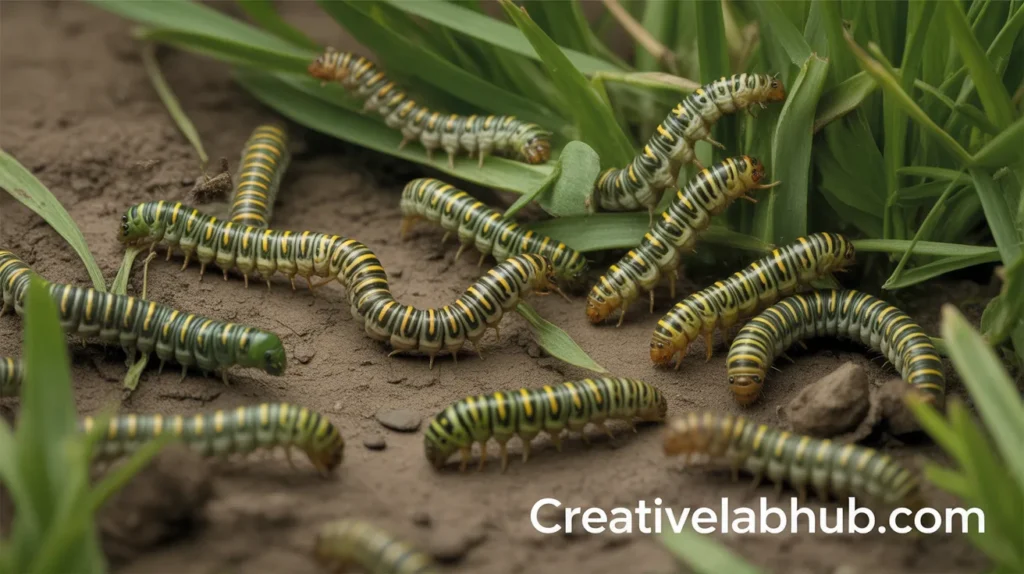
How to Control Army Worms Effectively
The good news is that army worms can be controlled. The key is acting quickly and using the right approach. A combination of methods tends to work best.
Here is a step-by-step approach you can follow:
- Scout your field or lawn regularly, especially after periods of warm, humid weather. Early detection makes a huge difference.
- Use pheromone traps to monitor adult moth populations. These traps attract and capture male moths, giving you advance warning before larvae appear.
- Apply biological control agents such as Bacillus thuringiensis (Bt), a naturally occurring bacteria that kills army worms without harming humans, animals, or beneficial insects.
- Use chemical insecticides only when necessary and rotate between different active ingredients to reduce the risk of resistance.
- Encourage natural predators such as parasitic wasps, ground beetles, and birds. These natural enemies help keep army worm populations in check.
One thing I always recommend to farmers and gardeners is to keep detailed records of when and where army worms appear on their property. This helps you anticipate future outbreaks and prepare in advance.
Natural and Organic Solutions for Army Worms
If you prefer to avoid chemical pesticides, there are effective natural options available for dealing with army worms.
Neem oil is one of the most popular organic treatments. It disrupts the hormonal system of army worms and reduces their ability to feed and reproduce. Spray it on affected plants in the evening for best results. Spinosad is another organic option derived from a soil bacterium. It is highly effective against army worms and breaks down quickly in the environment.
Diatomaceous earth can be applied around the base of plants to deter army worms from moving across the soil. It works by damaging the outer layer of the larvae, causing them to dehydrate. It is safe for humans and pets but should not be inhaled.
Companion planting also helps. Growing plants like marigolds, basil, or lemongrass near vulnerable crops can repel moths and reduce the likelihood of egg-laying. It is not a complete solution on its own, but it adds another layer of protection.
Army Worms on Lawns: What Homeowners Need to Know
Army worms are not just a farm problem. They can cause serious damage to residential lawns too. If you have ever seen your perfectly green lawn turn brown in large irregular patches after a rainstorm, army worms may be the cause.
The most vulnerable grass types include bermudagrass, ryegrass, fescue, and St. Augustine grass. Army worms tend to attack lawns in late summer and early fall. An infestation can destroy a large section of grass in just a few days.
To check your lawn for army worms, mix a few tablespoons of dish soap with water and pour it over a small section of grass. Within a few minutes, army worms will come to the surface if they are present. This is sometimes called the soap flush test, and it is one of the simplest and most reliable methods available.
Treatment for lawns follows the same principles as for crops. Apply Bt or spinosad-based products for an organic approach, or use a chemical insecticide if the infestation is severe. Water your lawn deeply after treatment to push the product into the soil where the worms are hiding.
Prevention Strategies That Actually Work
Prevention is always better than treatment when it comes to army worms. Here are some proven strategies:
Keep your lawn and garden healthy. Healthy, well-fertilized plants recover from light damage more quickly and are generally less attractive to pests. Avoid over-irrigating, since moist conditions attract egg-laying moths.
Rotate your crops. Army worms thrive when the same crop is grown in the same location year after year. Crop rotation disrupts their feeding cycle and reduces the buildup of pest populations in the soil.
Use floating row covers over vulnerable vegetables and seedlings. These physical barriers prevent moths from laying eggs directly on your plants.
Monitor weather forecasts. Army worm outbreaks often follow warm, moist weather systems. Being aware of these conditions puts you on alert to start scouting and take preventive action.
Conclusion
Army worms are a genuine threat to gardens, lawns, and farms around the world. They move fast, feed aggressively, and can cause devastating losses if not caught in time. But with the right knowledge and a proactive approach, you can protect your crops and green spaces effectively.
The most important things to remember are: scout regularly, act early, and combine multiple control strategies for the best results. Army worms are not invincible. They can be managed, and with consistent effort, you can keep them from causing serious harm to your property.
Have you dealt with army worms before? What worked best for you? Share your experience in the comments below, and feel free to share this article with fellow gardeners and farmers who might benefit from it.
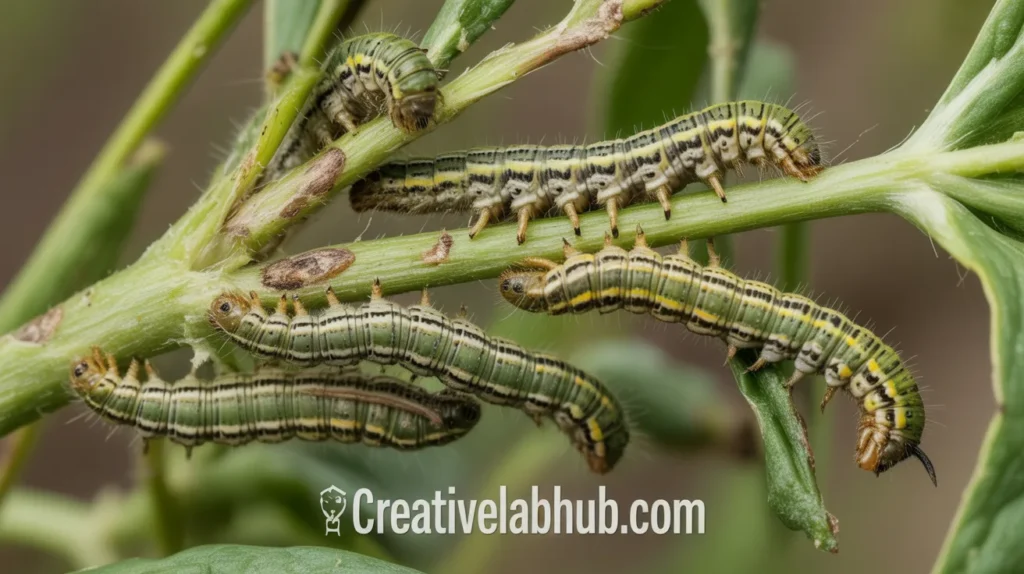
Frequently Asked Questions About Army Worms
What do army worms look like? Army worms are greenish or brownish caterpillars with stripes on the side of their body and a distinctive inverted Y-mark on their head. They grow to about 3 to 4 centimeters long.
How do army worms damage crops? Army worms chew through leaves, stems, and grass blades. They feed in large groups, which means they can strip a plant or an entire field very quickly.
Are army worms dangerous to humans? No, army worms are not dangerous to humans. They do not bite or sting. They are only a threat to plants.
When do army worms appear? Army worms are most active in warm, humid conditions. In the United States, outbreaks commonly occur from late summer through early fall.
How do I get rid of army worms on my lawn? You can use Bacillus thuringiensis (Bt), spinosad, or neem oil for an organic approach. Chemical insecticides are also available for severe infestations. Water your lawn after treatment.
Can army worms come back after treatment? Yes, army worms can return, especially if adult moths are still active in your area. Continue monitoring after treatment and reapply if needed.
What plants do army worms attack? Army worms attack a wide range of plants including corn, wheat, rice, sorghum, bermudagrass, ryegrass, and many vegetable crops.
How fast do army worms spread? Army worms can spread very quickly. Adult moths can fly hundreds of kilometers overnight. Larval populations can double in size within days under warm conditions.
Are there natural predators of army worms? Yes. Parasitic wasps, ground beetles, birds, and certain fungi naturally attack army worms and help keep populations under control.
What is the difference between armyworms and cutworms? Both are caterpillar pests, but army worms feed in groups and move in waves across fields, while cutworms tend to be solitary and cut plants at the base near the soil.
Also Read Creativelabhub.com
Email: johanharwen314@gmail.com
Author Name: Johan Harwen
About the Author: Johan Harwen is a passionate writer and researcher with years of experience covering agriculture, pest management, and environmental topics. He believes in making complex information easy to understand for everyday readers, whether they are professional farmers or weekend gardeners. Johan writes with clarity, care, and a genuine desire to help people protect what they have worked hard to grow. When he is not writing, he enjoys spending time outdoors and learning about sustainable farming practices.
