

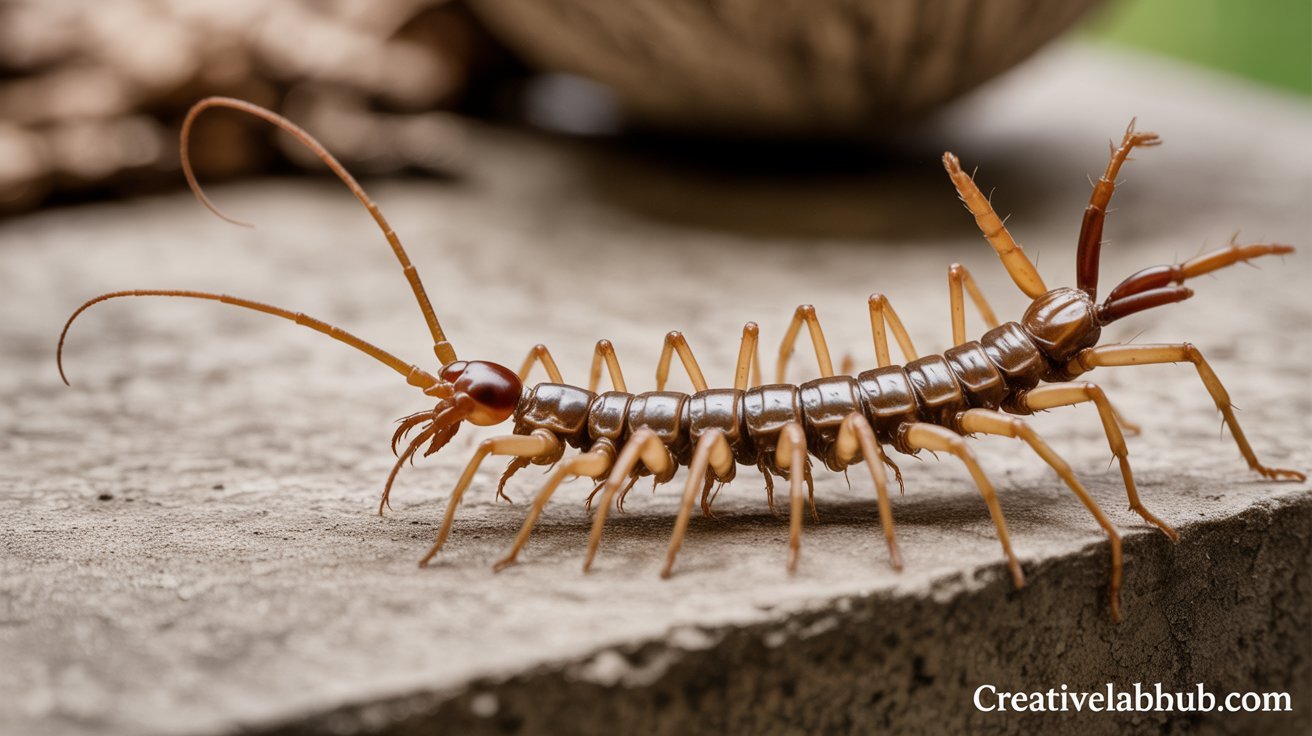
House Centipede: The Creepy but Fascinating Truth About House Centipedes 2026
Introduction
You’re reaching for a glass of water in the middle of the night, you flick on the kitchen light, and suddenly — something with what looks like a hundred legs goes skittering across the wall at an almost supernatural speed. Your heart jumps. You back up. What on earth was that?
That, my friend, was a house centipede.
Most people’s first instinct is to grab a shoe. And honestly? I get it. House centipedes are not the most charming-looking creatures. With their long, wispy legs and lightning-fast movements, they trigger every instinct that says “nope, not today.” But before you declare war on every house centipede in your home, it’s worth knowing what you’re actually dealing with.
In this article, you’ll learn what house centipedes really are, where they come from, what they eat, whether they’re dangerous, and — most importantly — what to do if you’ve got them.
What Exactly Is a House Centipede?
The house centipede (Scutigera coleoptrata) is one of the most recognizable creepy crawlies in the world. Unlike most centipedes that stay hidden underground or beneath logs, this species has fully adapted to living indoors alongside humans. It’s found on every continent except Antarctica, which tells you just how good it is at surviving.
The name “centipede” comes from Latin and roughly means “hundred feet.” But a house centipede actually has 30 legs — 15 pairs. Each leg is slightly longer than the one in front of it, which creates that rippling, wave-like motion when it runs. That motion is part of what makes it look so unsettling.
They’re typically yellowish-gray with dark stripes running along the body. Adults grow to about 1 to 1.5 inches in body length, but with legs extended, they can look much larger. Their antennae are almost as long as their legs, giving them a dramatic, almost alien silhouette.
How Long Do House Centipedes Live?
This surprises most people: house centipedes can live up to 3 to 7 years. That’s a long time for a bug. They reach sexual maturity around 3 years and can reproduce multiple times throughout their lives. A female house centipede lays around 35 eggs on average, though some can lay up to 150 in a single season.
Where Do House Centipedes Come From?
House centipedes originally come from the Mediterranean region. Over centuries of human travel and trade, they spread across the globe and eventually found their way into homes on nearly every continent. Today, they’re as global as they are creepy.
Inside your home, house centipedes gravitate toward dark, damp, humid spaces. They love basements, bathrooms, crawl spaces, and areas near plumbing. If your house has a moisture problem, it practically rolls out a welcome mat for them.
Why Are They in Your House?
There are a few reasons a house centipede ends up indoors:
- Moisture: They need humidity to survive and thrive. A damp basement is paradise.
- Food: If your home has other insects — ants, cockroaches, silverfish, spiders — house centipedes will follow.
- Warmth: Like most arthropods, they prefer moderate temperatures and will move indoors when it gets cold outside.
- Entry points: Cracks in foundations, gaps around pipes, and openings around windows all serve as easy access points.
So in a strange way, seeing a house centipede is your home giving you a signal — something else might be off, like excess moisture or a different bug problem hiding somewhere.
What Do House Centipedes Eat?
Here’s where things get genuinely interesting. House centipedes are predators, and very effective ones. They hunt and eat a wide variety of household pests including:
- Cockroaches
- Silverfish
- Spiders
- Ants
- Flies
- Bed bugs (yes, really)
- Termites
- Moths
They use their front legs — modified into claw-like appendages called forcipules — to grab prey and inject venom. This venom paralyzes the prey so the house centipede can eat it. The whole process happens fast. Very fast. House centipedes are actually among the most agile predators in the insect world.
This is the part where some pest control experts and entomologists will tell you to think twice before killing house centipedes. They’re essentially doing pest control for free, right inside your walls.
Are House Centipedes Dangerous to Humans?
Let’s get to the question that brought you here. Can a house centipede hurt you?
Technically, yes — but practically, it’s very unlikely.
House centipedes do have venom, and they can bite. However, biting a human is extremely rare. They’re shy, fast, and would much rather run away than pick a fight with something 100 times their size. When bites do occur, it’s usually because someone accidentally trapped or squeezed one — like reaching into a shoe without checking.
What Does a House Centipede Bite Feel Like?
A house centipede bite is often compared to a bee sting. It causes localized pain, redness, and minor swelling. Symptoms typically go away within a few hours. In most healthy adults, there’s no lasting harm.
That said, some people can have allergic reactions. If you experience severe swelling, difficulty breathing, or other unusual symptoms after a house centipede bite, seek medical attention promptly. This is rare, but it can happen.
There are no recorded human deaths attributed to house centipede bites. So while they look terrifying, they’re not genuinely dangerous to healthy people.
Are House Centipedes Dangerous to Pets?
House centipedes can bite pets, and the reaction is similar — localized pain and swelling, usually minor. Cats and dogs that hunt or play with them might get bitten on the nose or paws. It’s uncomfortable but rarely serious. Keep an eye on your pet if you suspect they’ve been bitten, and contact a vet if the reaction looks severe.
House Centipedes vs. Other Centipedes: What’s the Difference?
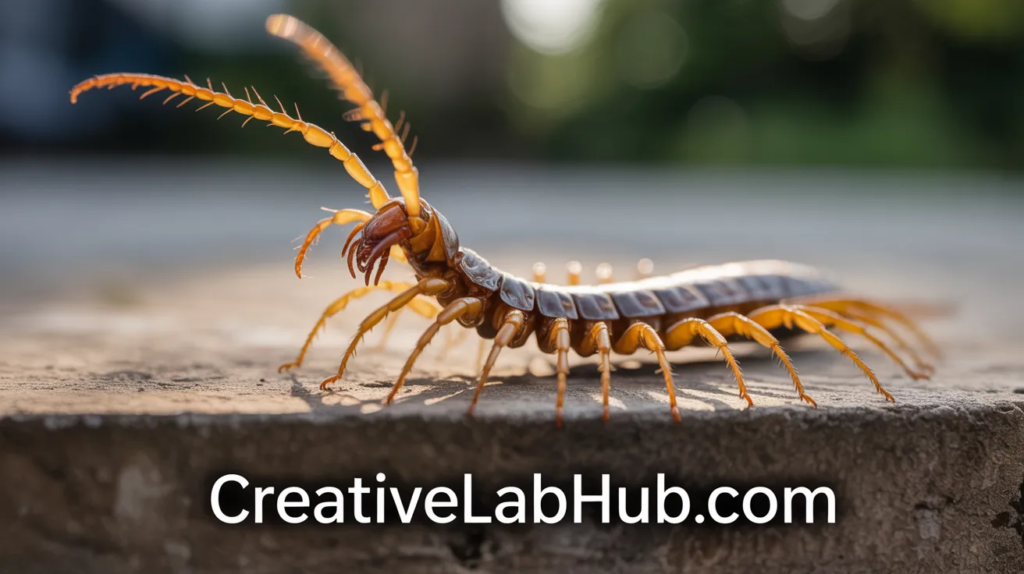
People sometimes confuse house centipedes with other centipede species, and the distinction matters.
Most centipedes — like the large, reddish Scolopendra species found in the American Southwest — are far more dangerous. They’re bigger, their venom is stronger, and they’re more aggressive. A bite from a giant desert centipede is a genuinely painful and potentially serious experience.
The house centipede, by contrast, is a much gentler creature. It’s smaller, less aggressive, and its venom is weak relative to other species. Knowing which type you’re dealing with helps you decide how seriously to take the situation.
Signs You Have a House Centipede Problem
One house centipede in your home is no big deal. It probably snuck in and is quietly eating your silverfish. But a full infestation is a different story.
Here are signs you might have more house centipedes than you’d like:
- Frequent sightings, especially during daylight hours (they’re usually nocturnal)
- Multiple house centipedes in different rooms or floors of your home
- You’re finding them in dry areas — this could mean the population is large and spreading beyond damp zones
- Other pest activity — if you’re seeing lots of other insects, house centipedes will follow the food
If you’re seeing them regularly, it’s time to take action — not just against the house centipede, but against whatever conditions are attracting them.
How to Get Rid of House Centipedes
If you’ve decided you’d rather not share your home with house centipedes, here’s how to actually deal with them effectively.
1. Fix Moisture Problems First
This is the single most important step. House centipedes are drawn to humidity. Use a dehumidifier in your basement. Fix leaky pipes. Make sure your bathroom has good ventilation. Address any water damage or dampness issues. Without moisture, house centipedes lose one of their biggest reasons to stick around.
2. Eliminate Their Food Source
If you get rid of the insects that house centipedes eat, they have no reason to stay. Address any other pest issues in your home. Seal food in airtight containers. Keep your home clean and free of crumbs and debris that attract ants and cockroaches.
3. Seal Entry Points
Walk around the exterior of your home and look for cracks in the foundation, gaps around pipes, and openings near windows and doors. Seal these with caulk or weatherstripping. This reduces how easily house centipedes — and other pests — can get inside.
4. Remove Outdoor Harborage Sites
House centipedes spend time outdoors too. Piles of leaves, mulch close to your foundation, rotting wood, and dense ground cover near the house all make great hiding spots. Clear these away to reduce the population living just outside your walls.
5. Use Sticky Traps
Sticky traps placed along baseboards and in corners can catch house centipedes over time. This won’t eliminate an infestation on its own, but it helps reduce numbers and tells you how active the population is.
6. Apply Insecticide if Necessary
For serious infestations, insecticides can help. Products containing pyrethrin or deltamethrin work well against house centipedes. Focus on cracks, crevices, and areas where you’ve seen activity. Always follow label instructions and keep products away from children and pets.
7. Call a Professional
If nothing else works, or if the infestation feels out of control, a licensed pest control professional can assess your situation and apply targeted treatments. They can also identify other pest problems contributing to the house centipede presence.
Should You Actually Kill House Centipedes?
Here’s where I’ll share my honest take: house centipedes are genuinely beneficial. They eat insects you really don’t want in your home — cockroaches, termites, bed bugs. Killing them removes a natural form of pest control from your home.
If you can stomach it, letting one or two house centipedes live in low-traffic areas like your basement or crawl space isn’t the worst idea. They stay out of your way, eat bugs you’d hate, and won’t hurt you unless you handle them roughly.
But that’s a personal call. Not everyone wants to coexist with something that looks like it crawled out of a science fiction movie, and that’s completely understandable.
How to Prevent House Centipedes From Coming Back
Once you’ve dealt with an infestation, you want to keep it from happening again. Prevention is simpler than treatment.
Keep humidity levels in your home below 50% where possible. This single habit makes your home far less appealing to house centipedes. Inspect your home’s exterior twice a year — spring and fall — for new entry points. Stay on top of other pest issues so house centipedes don’t have a reason to move in. And keep clutter in storage areas minimal, since house centipedes love dark hiding spots.
Interesting Facts About House Centipedes
Before we wrap up, here are some facts about house centipedes that you might not expect:
- House centipedes can run up to 1.3 feet per second. That’s shockingly fast for something so small.
- They have compound eyes and can see in multiple directions at once.
- Their long legs allow them to sense vibrations and changes in air currents, giving them an almost supernatural awareness of nearby prey.
- They molt throughout their lives, growing new leg pairs as they mature. Young house centipedes hatch with only 4 pairs of legs.
- House centipedes have been documented in human homes for thousands of years. Ancient Romans likely had them too.
Conclusion
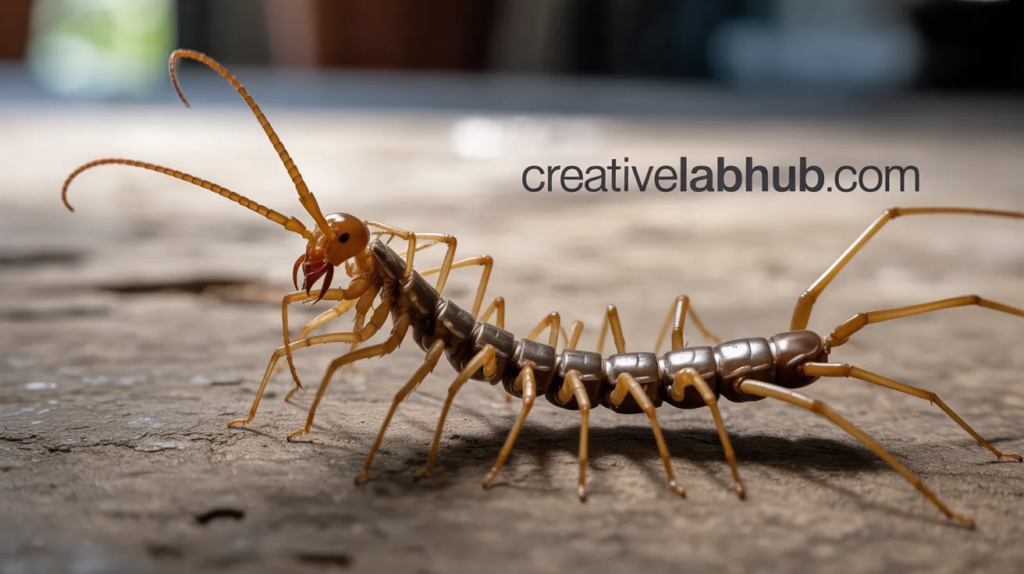
House centipedes are one of those creatures that provoke a visceral “kill it immediately” reaction in most people — and then, once you learn more about them, a grudging sense of respect. They’re fast, efficient predators that happen to target the very pests you least want in your home. They’re not dangerous to humans in any meaningful way. And they’ve been sharing our spaces for millennia.
That doesn’t mean you have to love them or tolerate them. If house centipedes are making you uncomfortable, take the steps to reduce moisture, seal entry points, and address other pest issues. Those actions solve the house centipede problem at the root rather than just chasing individual bugs around the bathroom.
But if you spot just one skittering across the wall late at night? Maybe let it go. It’s probably doing you a favor.
Have you ever had a run-in with a house centipede? Did you panic, or are you part of the rare crew that lets them be? Drop your story in the comments — I’d genuinely love to know.
Frequently Asked Questions About House Centipedes
Q1: Are house centipedes dangerous? House centipedes are not considered dangerous to humans. They can bite if provoked, but bites are rare and cause only minor pain and swelling similar to a bee sting. No human deaths have been linked to house centipede bites.
Q2: Why do I suddenly have so many house centipedes? A sudden increase in house centipedes usually points to two things: a moisture problem and an increase in other insects they feed on. Address dampness in your home and check for other pest activity.
Q3: What attracts house centipedes to a home? House centipedes are attracted to dark, damp environments and the presence of other insects like cockroaches, silverfish, ants, and spiders. Humidity is the biggest draw.
Q4: Can house centipedes climb walls and ceilings? Yes. House centipedes can climb walls, ceilings, and other vertical surfaces with ease. Their specialized legs allow them to move on almost any surface.
Q5: Do house centipedes lay eggs in houses? Yes, house centipedes can lay eggs indoors, typically in damp, dark areas like basements or behind walls. Females lay around 35 eggs on average, though some can lay significantly more.
Q6: How do I keep house centipedes out of my bed? Keep your bedroom dry and clutter-free. House centipedes rarely enter bedrooms unless there’s a large infestation. Reducing humidity throughout the home is your best defense.
Q7: Are house centipedes good or bad for your home? From a purely functional standpoint, house centipedes are beneficial. They eat cockroaches, silverfish, ants, and other pests. Whether that benefit outweighs the discomfort of having them around is a personal judgment call.
Q8: How do I know if a house centipede bit me? A house centipede bite typically causes a sharp, stinging pain at the site, followed by redness and minor swelling. It feels similar to a bee sting. Symptoms usually resolve within a few hours.
Q9: What’s the fastest way to get rid of house centipedes? The fastest approach combines reducing humidity with sticky traps and targeted insecticide application. However, for lasting results, you need to address the root causes: moisture and other pest populations.
Q10: Do house centipedes die in winter? House centipedes don’t die in winter — they move inside to escape the cold. This is why many people notice them more frequently during fall and winter months.
Also Read : Hang On Sloopy
