

The Track Saw Guide That Actually Makes Sense (And Saves You Money) 2026
Introduction
If you’ve ever tried cutting a full sheet of plywood with a regular circular saw and ended up with a jagged, wandering cut — you know the frustration. I’ve been there. You clamp down a straightedge, hold your breath, and still somehow drift off the line by a quarter inch. That’s exactly the problem a track saw was built to solve.
A track saw (also called a plunge-cut saw or guide rail saw) is a power saw that rides along a precision aluminum track, giving you cuts so straight and clean they look like they came off a factory table saw. Whether you’re a seasoned woodworker or just getting started with DIY projects, this tool can genuinely change how you work.
In this guide, you’ll learn what a track saw is, how it works, when to use one, how it compares to other saws, and what to look for when buying one. By the end, you’ll know exactly whether a track saw belongs in your shop.
What Is a Track Saw and How Does It Work?
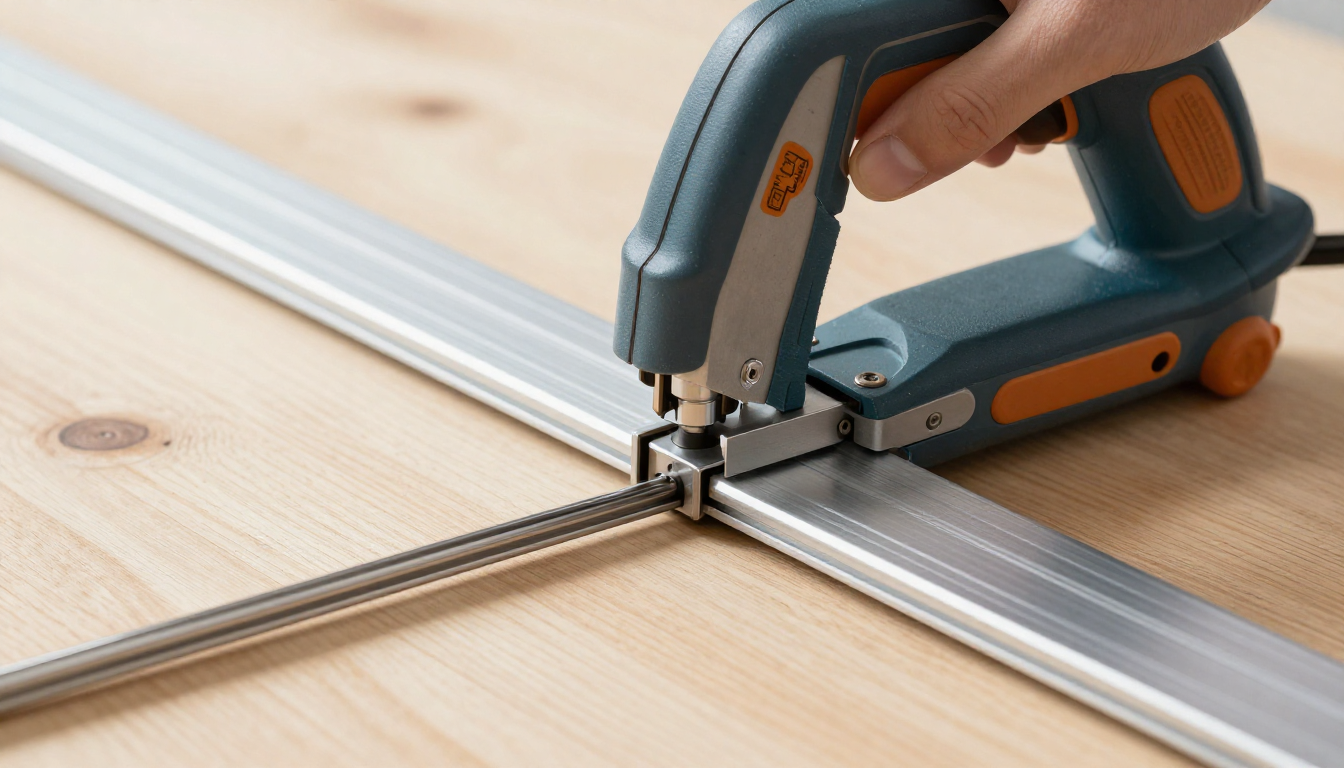
A track saw is a circular saw that attaches to a specially designed aluminum guide rail — also called a track. The saw slides along the track smoothly and precisely, keeping the blade on a perfectly straight path from start to finish.
Unlike a standard circular saw, a track saw uses a plunge-cut mechanism. This means the blade drops straight down into the material rather than entering from the edge. That feature alone opens up a lot of possibilities, like cutting in the middle of a panel or starting a cut anywhere on the workpiece.
The track itself has a rubber anti-slip strip on the bottom. This grips the material and holds the track firmly in place without needing clamps in many situations. On top of that, most track saws feature a splinter guard — a rubber strip along the edge of the track that compresses against the wood and gives you a tear-free cut on the top face.
The result? Cuts that are razor-straight, clean, and repeatable every single time.
Track Saw vs Circular Saw: What’s the Real Difference?
This is one of the most common questions people ask. Both tools use a spinning circular blade to cut wood, but the similarities stop there.
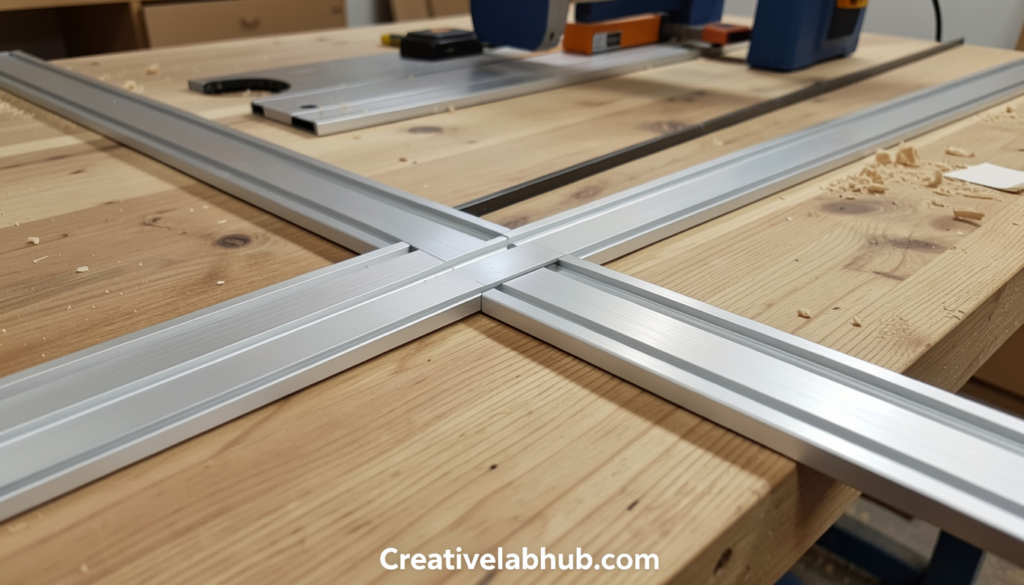
A regular circular saw is freehand. You guide it yourself, which means your cut quality depends entirely on your skill and how steady your hand is. A track saw, on the other hand, is guided mechanically by the track. Human error is almost completely eliminated.
Here’s a quick breakdown of how they differ:
- Accuracy: A track saw produces cuts accurate to fractions of a millimeter. A circular saw depends on user skill.
- Tear-out: Track saws produce virtually zero tear-out on the top face. Circular saws often leave rough edges.
- Safety: Track saws are generally safer because the blade is enclosed and the saw can’t wander.
- Dust collection: Most track saws connect directly to a dust extractor and capture nearly all sawdust at the source.
- Portability: Both are portable, but the track saw’s setup takes a minute longer.
- Cost: Track saws cost significantly more, typically ranging from $300 to over $700 for professional models.
If you’re doing rough cuts or construction work, a circular saw is perfectly fine. But if you need precision — for cabinet making, furniture building, or finish carpentry — a track saw is in a completely different league.
Track Saw vs Table Saw: Can It Replace One?
Many woodworkers wonder if a track saw can fully replace a table saw. The short answer is: it depends on what you’re doing.
A table saw excels at repetitive rip cuts, dado cuts, and angled cuts on smaller pieces. It’s a stationary machine with consistent repeatability. A track saw, however, is mobile and can break down a full 4×8 sheet of plywood on the floor or on sawhorses — something a table saw simply can’t do without an expensive outfeed table and a large shop.
For smaller workshops or anyone working on job sites, a track saw is often the smarter investment. You don’t need a massive, heavy table saw sitting in the middle of your garage when you can achieve similarly clean cuts with a track saw and a good track.
That said, if you do lots of narrow ripping or fine joinery, a table saw still has advantages. Many professional woodworkers own both and use them together.
Key Benefits of Using a Track Saw
Let’s talk about why so many woodworkers — from hobbyists to professionals — have fallen in love with the track saw.
1. Incredible Cut Quality
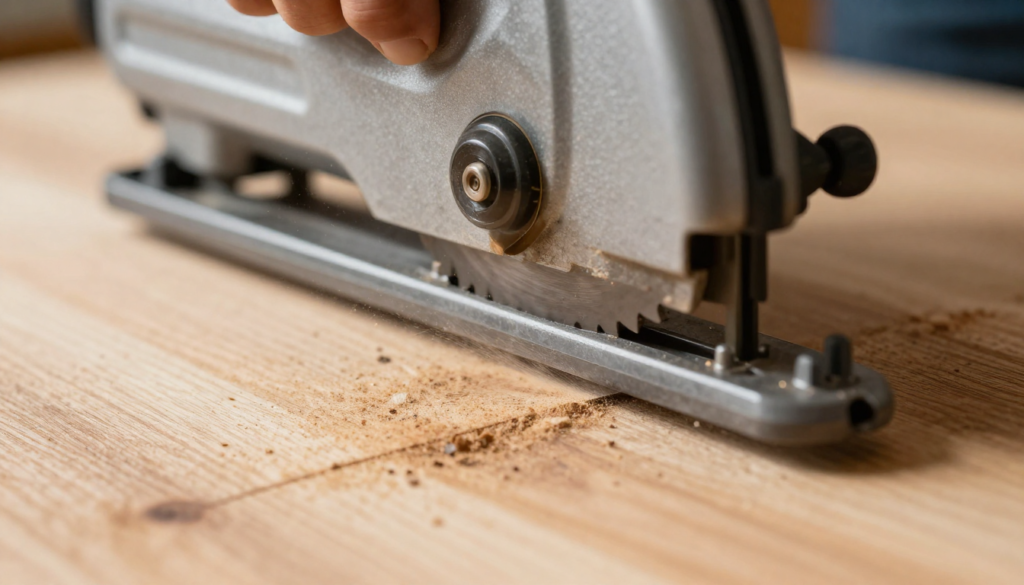
The splinter guard on the track creates a zero-clearance edge right where the blade cuts. This dramatically reduces tear-out on the top surface of your workpiece. If you’re cutting veneer plywood or expensive hardwood panels, this alone is worth the price of the tool.
2. True Portability
You can use a track saw anywhere. On the floor, on a workbench, on sawhorses, or even on a job site with no power table available. The tracks are lightweight and easy to transport. Some tracks are only 55 inches long, while others extend to 118 inches or more for full-panel cuts.
3. Safer Than a Circular Saw
With a track saw, the blade doesn’t wander. The saw stays locked in the track the entire time. Kickback is also significantly reduced because the plunge mechanism and track keep the blade controlled. For beginners especially, this is a big deal.
4. Dust Collection That Actually Works
Most track saws have a dedicated dust port that connects directly to a shop vacuum or dust extractor. The enclosed blade housing and tight fit along the track mean close to 90% of sawdust gets captured before it ever reaches the air. Your lungs (and your shop floor) will thank you.
5. Works on Any Flat Surface
You don’t need a fancy workbench. Many people cut full sheets of plywood on the floor using rigid foam insulation as a sacrificial cutting surface underneath. The track saw plunges cleanly through the material and slightly into the foam, giving you full support and a clean cut.
What Can You Cut With a Track Saw?
A track saw is more versatile than most people realize. Here’s what you can cut:
- Plywood and sheet goods — This is the most common use. Breaking down 4×8 sheets quickly and cleanly.
- Solid hardwood — Ripping boards or cross-cutting with clean edges.
- MDF and particleboard — Track saws handle these materials beautifully with minimal dust spillage.
- Laminate flooring — Precise cuts without chipping the surface.
- Soft metals — With the right blade, some track saws can cut aluminum sheet or thin steel.
- Foam and insulation board — Great for construction and thermal applications.
- Decking and exterior lumber — Useful on job sites for clean finish cuts.
The key thing to remember is that the track saw is primarily designed for straight cuts. It’s not made for curves, intricate shapes, or tight radiuses — that’s a job for a jigsaw or band saw.
How to Use a Track Saw Safely and Effectively
Using a track saw isn’t complicated, but doing it right makes a big difference.
Step 1: Set up your cutting surface. Lay your material flat on sawhorses or foam. Make sure it’s fully supported on both sides of the cut.
Step 2: Measure and mark your cut line. Use a tape measure and pencil to mark where you want to cut.
Step 3: Position the track. The splinter guard edge of the track sits exactly on your cut line. Most tracks have clear markings to help you align them.
Step 4: Check the depth of cut. Set the blade depth so it just barely exits the bottom of your material — usually about 2–3mm deeper than the thickness of the wood.
Step 5: Connect your dust extractor. Always use dust collection when possible. It keeps visibility clear and protects your lungs.
Step 6: Make the cut. Engage the plunge mechanism, power on the saw, and push it steadily along the track. Don’t rush. Let the blade do the work.
Step 7: Release the plunge lock before lifting. This is important. Always let the blade fully stop before lifting the saw off the track.
A few safety tips worth repeating: always wear safety glasses, keep your hands away from the blade path, and never remove the track while the saw is running.
Choosing the Right Track Saw: What to Look For
The market for track saws has exploded in the last decade. Here’s what matters when you’re shopping for one.
Motor Power
Look for at least 1,200 watts (or around 12 amps in North American models). More power means the saw handles thick hardwoods and dense materials without bogging down. Professional-grade track saws often run 1,600 watts or more.
Blade Size
Most track saws use 160mm to 185mm blades. Larger blades allow deeper cuts. If you regularly cut thick material — 2-inch hardwood or stacked panels — go with a larger blade diameter.
Maximum Cut Depth
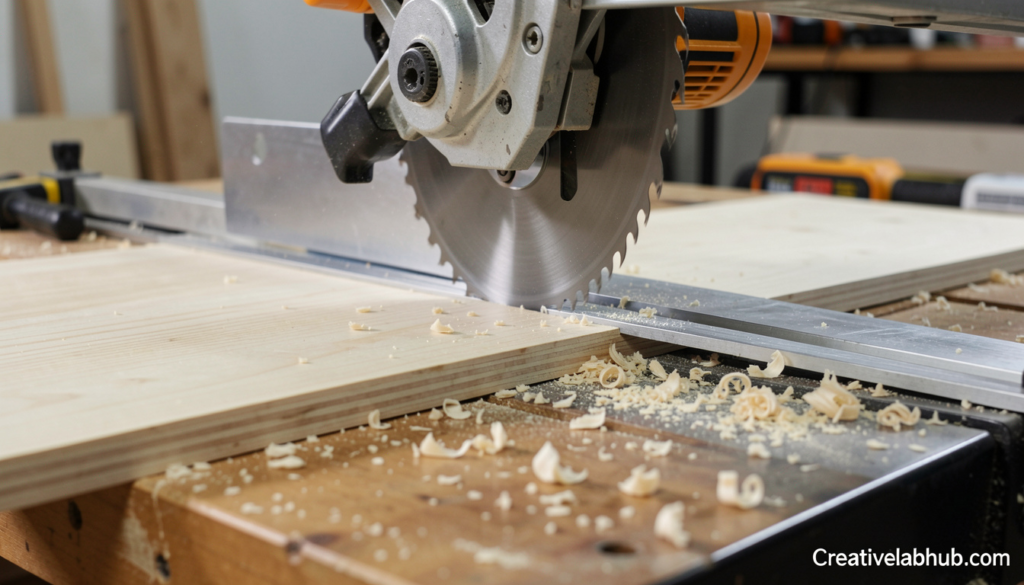
Check the spec sheet for maximum cut depth at 90 degrees and at 45 degrees. A good track saw should cut at least 55mm (about 2.2 inches) at 90 degrees.
Bevel Capacity
Most track saws bevel to 45 degrees, but some go beyond that. If you do angled cuts regularly — like miters on trim or custom furniture — look for a saw with a full 47 or 48-degree bevel range.
Track Compatibility
Some tracks are proprietary to one brand. Festool and Mafell use their own systems. Other brands like Makita, Triton, and Grizzly have more open compatibility. If you buy adapters, you can often use off-brand tracks with compatible saws. But for best results, match the saw to its intended track.
Dust Extraction Port
Make sure the port fits your existing dust extractor hose diameter or comes with adapters. A 36mm port is the most common standard.
Build Quality
Magnesium and aluminum bodies last longer and weigh less than plastic. Professional track saws from Festool, Makita, and Mafell feel completely different from budget options — but they cost significantly more.
Best Track Saw Brands Worth Knowing
You don’t need to spend a fortune to get a capable track saw, but quality matters. Here’s a quick overview of the major players.
Festool is widely considered the gold standard. Their track saw systems are precise, durable, and have excellent dust collection. But expect to pay $500–$800 or more for the saw alone.
Makita offers excellent quality at a more accessible price point. Their track saws are compatible with Festool tracks in many cases and perform impressively in real-world use.
Bosch makes solid mid-range options with good dust collection and reliable motor performance.
Triton and Grizzly are budget-friendly alternatives. They’re not as refined as Festool or Makita, but they’re great for hobbyists or occasional users who want plunge-cut capability without the professional price tag.
Mafell is another premium German brand that rivals Festool in quality but is less commonly discussed in North American workshops.
Common Track Saw Mistakes Beginners Make
Even a great tool can deliver poor results if you use it incorrectly. Here are mistakes to avoid.
Not securing the track properly is a big one. Even though the anti-slip strip holds the track well, always use at least one clamp on long cuts or when working with smooth-surfaced materials like melamine. The track shifting mid-cut ruins everything.
Using a dull blade is another common issue. A dull blade causes burning, tear-out, and puts unnecessary strain on the motor. Replace or sharpen blades regularly, especially when cutting hardwood or MDF.
Rushing the cut is tempting but counterproductive. Moving the saw too fast causes the blade to deflect slightly, which affects cut quality. Maintain a smooth, steady pace and let the saw move at its natural speed.
Finally, skipping dust extraction might seem like a minor shortcut. But fine wood dust — especially from MDF — is genuinely hazardous to breathe. Always connect a vacuum or at minimum wear a proper respirator.
Is a Track Saw Worth It for Beginners?
Absolutely — if you’re doing any kind of woodworking that involves sheet goods or precision straight cuts. The learning curve is minimal compared to most power tools. Within an hour of using a track saw, most beginners are making cuts that would take an experienced carpenter to replicate with a circular saw.
That said, if you only occasionally cut a piece of lumber for a small home repair, a track saw might be overkill. A good circular saw with a quality straightedge guide will do the job.
But if woodworking is something you enjoy and want to improve at — a track saw is one of the best investments you can make early on. It removes one of the biggest frustrations in the craft and lets you focus on design and assembly rather than fighting wavy cuts.
Conclusion
A track saw is one of those tools that feels almost unfair once you start using it. Cuts that used to take careful setup and nervous concentration become quick, clean, and repeatable. It’s genuinely one of the most satisfying tools to use in a woodworking shop.
Whether you’re building cabinets, furniture, installing flooring, or just trying to break down sheet goods without a big table saw taking up half your garage — the track saw delivers results that are hard to match with any other portable tool.
Think about the projects you’ve struggled with because of imprecise cuts. A track saw solves most of them. Have you used one before, or are you still on the fence about adding one to your workshop? Drop your thoughts or questions — I’d love to hear what you’re working on.
Frequently Asked Questions
1. What is a track saw used for? A track saw is primarily used for making straight, clean cuts in sheet goods like plywood, MDF, and hardwood panels. It can also be used for solid wood, laminate flooring, and sometimes soft metals with the right blade.
2. Is a track saw better than a circular saw? For precision and cut quality, yes. A track saw produces far cleaner, more accurate cuts than a freehand circular saw. However, a circular saw is cheaper and faster for rough cuts where precision isn’t critical.
3. Can a track saw replace a table saw? It can for many tasks, especially breaking down large sheet goods. But a table saw is still better for repetitive narrow rips, dado cuts, and smaller workpieces that need consistent sizing.
4. What track saw should a beginner buy? Makita and Bosch offer excellent mid-range track saws that are great for beginners. They’re accurate, well-built, and come at a more accessible price than Festool without sacrificing too much performance.
5. How deep can a track saw cut? Most track saws cut between 50mm and 70mm at 90 degrees, depending on the model and blade size. Some professional saws cut even deeper.
6. Do I need a special track for my track saw? Most brands sell their own tracks, and some are proprietary. Festool and Makita tracks are often cross-compatible. Always check compatibility before mixing brands.
7. Can I use a track saw on the floor? Yes. Many woodworkers cut sheet goods on the floor using rigid foam insulation as a sacrificial surface underneath the material. It’s a practical setup for small shops.
8. How do I get zero tear-out with a track saw? Use the splinter guard on the track, ensure it’s in good condition, and use a sharp fine-tooth blade. Scoring the cut line with a utility knife before cutting also helps on veneer-faced plywood.
9. Are track saws safe for beginners? Yes — they’re actually safer than circular saws for most users because the blade path is fixed by the track, kickback is reduced, and the blade is more enclosed.
10. How long does a track saw track last? With proper care, aluminum guide rails last for many years — even decades. Keep the anti-slip strip clean and replace it if it wears down or loses grip.
Also Read : Reciprocating Saw


