

Business Casual Women: The Ultimate Style Guide You Need in 2026
Introduction
Getting dressed for work should not feel like solving a puzzle. But for most women, the phrase “business casual” lands somewhere between confusing and frustrating. Is it jeans? Is it a blazer? Can you wear sneakers? Nobody ever gives you a straight answer.
Here is what I know from years of figuring this out: business casual women‘s dressing is not about following a strict rulebook. It is about looking put-together, professional, and confident without the stiffness of a full suit. Think polished but breathable. Smart but not stuffy.
In this guide, you will learn exactly what business casual means for women in 2025. You will discover the core wardrobe pieces, outfit formulas that actually work, and smart tips to dress for every season and workplace. Whether you are starting a new job or just tired of the morning panic, this article has you covered.
What Does Business Casual Actually Mean for Women?
The term “business casual” was born in the 1990s when Silicon Valley startups pushed back against the traditional suit-and-tie culture. Since then, it has evolved into the most common dress code across offices worldwide.
For women, business casual sits between formal business wear and casual everyday clothing. It is professional enough to impress a client. It is relaxed enough that you are not tugging at a blazer all afternoon.
Most workplaces define it something like this:
- Yes: Tailored trousers, blouses, midi skirts, blazers, smart flats, loafers, low heels
- Maybe (depends on the office): Dark-wash jeans, clean sneakers, dressy jumpsuits
- No: Ripped jeans, crop tops, flip-flops, overly casual graphics tees, athletic wear
The tricky part is that every workplace has its own version of business casual. A creative agency in Karachi reads it differently than a law firm in London. Always observe what your colleagues wear. That tells you more than any dress code policy.

The Core Wardrobe Pieces Every Woman Needs
You do not need a closet full of expensive clothes to look great at work. You need the right foundation pieces that mix and match with ease. Here are the non-negotiables.
Tailored Trousers
A well-fitted pair of trousers is the backbone of the business casual wardrobe. Go for neutral shades first: black, navy, camel, and grey. They work with almost everything. The fit matters more than the brand. They should sit comfortably at the waist and fall cleanly to the ankle. Avoid trousers that bag around the knees or bunch at the hem.
The Classic Blazer
The blazer is your best friend. Throw it over a simple blouse and you look instantly more polished. It adds structure to soft outfits and works in every season. A fitted blazer in a neutral tone like black, beige, or navy is a smart first purchase. Once you have the basics, you can branch into bolder colors and patterns.
Blouses and Smart Tops
Blouses are the workhorses of a business casual wardrobe. They are more polished than a t-shirt but more relaxed than a formal dress shirt. Silk-look blouses, structured button-downs, and relaxed wrap tops all work beautifully. Avoid tops that are too sheer, too tight, or cut too low for a professional setting.
Midi Skirts and Pencil Skirts
Skirts are a great alternative to trousers and can feel far more comfortable during long work days. A midi skirt in a solid color or a subtle pattern looks elegant and professional. Pencil skirts are a classic choice for more formal office settings. Pair both with a tucked-in blouse and you have a complete look.
Smart Dresses
A well-chosen dress is a complete outfit in one step. Shirt dresses, wrap dresses, and sheath dresses all work for business casual settings. Look for dresses that fall at or below the knee for a reliable professional look. Avoid anything too clingy or too casual in fabric.
Shoes That Work Hard
Footwear can elevate or ruin an outfit. For business casual, your go-to options are:
- Block-heel pumps
- Pointed-toe flats
- Clean loafers
- Ankle boots
- Simple mules
Keep them clean and scuff-free. Even a great outfit looks careless with worn-out shoes.
Outfit Formulas That Actually Work
One of the best things you can do for your workday wardrobe is to build a set of reliable outfit formulas. These are combinations that always look good together. You stop thinking so hard in the morning and you still leave the house looking great.
Formula 1: Tailored Trousers + Blouse + Blazer
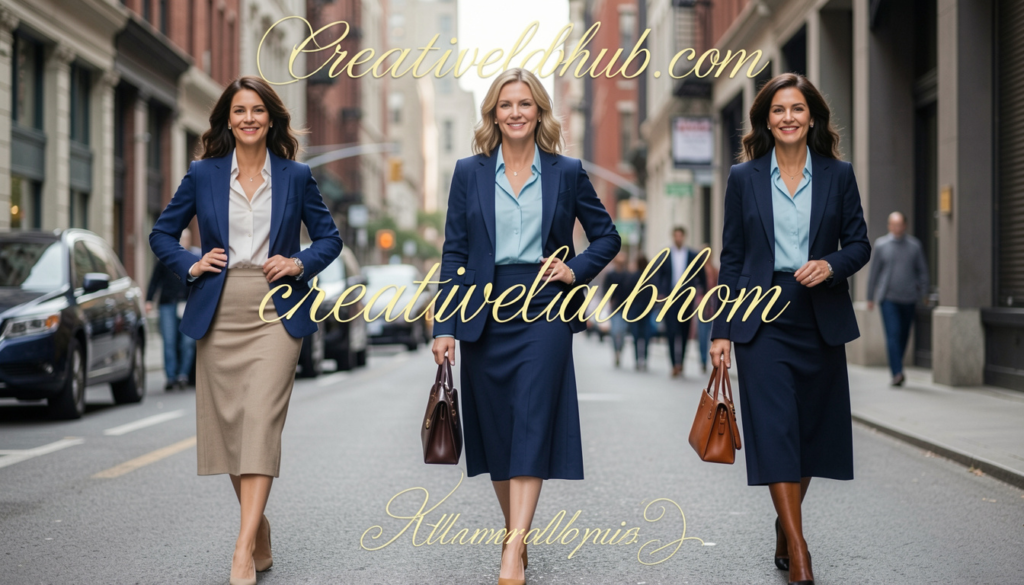
This is the classic. It works for every office, every season, and almost every occasion. Swap the colors and fabrics to keep it fresh. Try black trousers, a pale blush silk blouse, and a charcoal blazer. Or try wide-leg camel trousers with a white structured blouse and a navy blazer.
Formula 2: Midi Skirt + Fitted Top + Loafers
This formula is easy, comfortable, and looks very intentional. A neutral midi skirt with a simple fitted turtleneck and clean leather loafers is a smart, modern look. Add a belt to define your waist and it immediately looks more put-together.
Formula 3: Sheath Dress + Blazer + Heels or Flats
You cannot go wrong here. A sheath dress in a solid color or a refined print, a blazer layered on top, and your choice of heels or flats. This look works for everything from Monday morning meetings to after-work dinners.
Formula 4: Dark Jeans + Blouse + Structured Blazer (When Allowed)
Dark, well-fitting jeans can work in many business casual environments. The key is pairing them with clearly professional pieces. A silk blouse and a sharp blazer with pointed flats brings the whole look up. Avoid light-wash or distressed denim in professional settings.

Color and Pattern Rules Made Simple
You do not need to dress in all grey and navy to look professional. Color is your friend. Here is how to use it smartly.
Start with neutrals as your base. Black, white, navy, grey, beige, and camel are your foundation. They pair with everything. Once you have these covered, you can layer in color.
Add one statement piece per outfit. If your trousers are camel and your blouse is white, your blazer can be a bold terracotta or cobalt. One pop of color keeps the look fresh without overwhelming it.
Patterns work well in small doses. A subtle stripe, a classic plaid, or a fine print on a blouse or skirt adds visual interest. Avoid mixing more than two patterns at once unless you really know what you are doing.
Seasonal colors help keep your wardrobe feeling current. In summer, think soft pastels and warm whites. In winter, rich jewel tones like burgundy, forest green, and deep blue feel luxurious and professional.
How to Dress Business Casual Across Different Seasons
Dressing for work across seasons is something a lot of women overlook. Your wardrobe should adapt to the temperature while maintaining that polished look.
Summer Business Casual
Summer calls for lighter fabrics. Linen, cotton, and light viscose are your best options. Go for sleeveless blouses and dresses, then keep a cardigan or light blazer at your desk for air-conditioned offices. Midi dresses in breathable fabric are a summer lifesaver.
Autumn and Spring Business Casual
These transitional seasons are actually the best for outfit layering. A trench coat over a blouse and trousers is a timeless look. Ankle boots start to make appearances. Medium-weight blazers, light-knit cardigans, and turtlenecks all become relevant.
Winter Business Casual
Layering is everything in winter. A fine-knit turtleneck under a blazer is a refined combination. Wool-blend trousers are both warm and polished. Add a long coat and knee-high boots and you have a full winter work look that still feels pulled together.
Common Business Casual Mistakes to Avoid
Even with the best intentions, it is easy to slip up. Here are the most common mistakes women make with business casual dressing and how to avoid them.
Wearing clothes that do not fit properly. Too tight, too loose, or too long all read as unprofessional. Fit is everything. Invest in a good tailor if needed.
Overdoing the casual part. Business casual means casual in the context of business. Hoodies, ripped denim, and athleisure do not belong in most professional environments.
Ignoring grooming and accessories. Your outfit can be perfect but sloppy nails, messy hair, or worn shoes will undercut the whole look. Pay attention to the full picture.
Playing it too safe every single day. Wearing all grey and all black every day is technically fine but it can make you feel invisible. Add subtle color and personality. Your clothes are part of how you present yourself.
Not knowing your own workplace culture. Always read the room. The dress code in a creative media company is very different from a financial firm. Observe, then adapt.
Accessories That Pull the Look Together
The right accessories complete a business casual outfit without overpowering it. Keep these in rotation:
Bags: A structured tote or a clean leather satchel is the ideal work bag. It should be big enough to carry your essentials and polished enough to complement professional outfits.
Jewellery: Simple and refined works best. A pair of small hoop earrings, a delicate necklace, or a classic watch are all excellent choices. Avoid anything too flashy or too noisy.
Belts: A leather belt in black, tan, or cognac adds polish to trouser-based outfits and defines the waist on looser dresses.
Scarves: A lightweight scarf adds a layered, European elegance to simple outfits. Wear it loosely around the neck or tied at the bag handle for subtle style.
Building a Business Casual Capsule Wardrobe on a Budget
You do not have to spend a fortune to build a reliable work wardrobe. Here is a simple starter list that covers most combinations:
- Two pairs of tailored trousers (black + one neutral)
- One structured blazer (navy or black)
- Three blouses (one white, two in soft colors or prints)
- One midi skirt
- One smart dress (sheath or wrap)
- One pair of clean, comfortable flats
- One pair of block-heel pumps or loafers
- One structured work bag
- Two pairs of simple earrings
- One lightweight cardigan
With these ten to twelve pieces, you can build well over twenty different outfits. The key is to buy well rather than buy more. Choose quality fabrics that hold their shape. Look for timeless cuts over trendy silhouettes.
Quick Style Tips I Swear By
These are the small things that make a big difference:
- Always steam or iron your clothes the night before. Wrinkles undo an otherwise great outfit.
- Invest in good underlayers. The right nude bra and seamless underwear make clothes sit better.
- Keep a backup blazer at your office desk. It solves the “last-minute meeting” panic.
- Wear your most comfortable work shoes on your heaviest meeting days. Confidence comes from comfort.
- Check your outfit in natural light before you leave the house. Office lighting hides a lot.
Conclusion
Business casual women’s dressing does not have to be complicated. Once you understand the core pieces, the outfit formulas, and the subtle rules of your own workplace, it becomes second nature. You build a wardrobe that works hard for you, makes you feel confident, and does not require a major rethink every Monday morning.
Start with the basics: tailored trousers, a blazer, a few great blouses, and shoes that mean business. Add your own personality through color, accessories, and the way you put things together. That combination of professionalism and personal style is what business casual is really about.
What is your current biggest challenge with dressing for work? Share it in the comments or send this guide to a colleague who could use it.
Frequently Asked Questions
1. What is considered business casual for women? Business casual for women typically includes tailored trousers, blouses, midi skirts, blazers, smart dresses, and polished flats or heels. It is professional and neat but less formal than a full suit.
2. Can women wear jeans as business casual? Yes, in many workplaces dark-wash, well-fitted jeans are acceptable as business casual. Pair them with a blouse and blazer to keep the look professional. Always check your company’s specific dress code.
3. Are sneakers acceptable for business casual women? Clean, minimalist sneakers are increasingly acceptable in creative or relaxed office environments. In more traditional workplaces, stick to loafers, flats, or heels.
4. What colors are best for business casual outfits? Neutral colors like black, navy, grey, white, and camel are the most reliable. They mix and match easily. Add one accent color per outfit to keep things interesting without going overboard.
5. What shoes should women wear for business casual? Block-heel pumps, pointed-toe flats, loafers, ankle boots, and simple mules are all great business casual shoe choices. Make sure they are clean and in good condition.
6. Can women wear sleeveless tops for business casual? Yes, sleeveless blouses and dresses work for business casual, especially in summer. Pair them with a blazer or cardigan for a polished finish, and ensure the style is structured rather than casual.
7. What is the difference between business casual and smart casual for women? Business casual leans more professional and is worn in workplace settings. Smart casual is slightly more relaxed and can be worn outside of work. The line between them can blur depending on the environment.
8. How do I build a business casual wardrobe on a budget? Focus on a small number of versatile, high-quality pieces: two pairs of trousers, one blazer, three blouses, one dress, and two pairs of shoes. Buy neutral colors that you can mix and match for maximum outfits.
9. What should women avoid wearing for business casual? Avoid ripped jeans, crop tops, graphic casual tees, athletic wear, flip-flops, overly sheer tops, and anything that fits poorly. These styles break the professional tone that business casual requires.
10. Is a wrap dress business casual for women? Yes, a wrap dress is a classic business casual choice. It is feminine, flattering, and professional. Choose one in a solid color or a refined print, and pair it with loafers, heels, or ankle boots.
also read: creativelabhub.com
email: johanharwen@314gmail.com
Author Name: Sarah Mills
About the Author : Sarah Mills is a fashion writer and style consultant with over eight years of experience helping women build wardrobes that work for their real lives. She writes about professional style, capsule wardrobes, and everyday dressing with a practical, no-fluff approach. When she is not writing, she is hunting for the perfect blazer or convincing her friends that loafers go with everything.