


Redmi 10 5G to Buy: Smart Deal or Costly Mistake
Introduction
You want 5G. You want a big screen. You want a phone that does not drain your wallet the moment you pick it up. If any of that sounds familiar, the Redmi 10 5G has probably already shown up in your search results.
The Redmi 10 5G arrived globally on March 29, 2022, and it still shows up on store shelves and buying guides in 2025 and 2026. Starting at around $107, it pitches itself as the most affordable ticket into 5G connectivity. That is a bold claim. And like most bold claims in the budget phone space, the truth is layered.
This guide gives you everything you need before deciding on the Redmi 10 5G to buy. We walk through the full spec sheet, real-world performance, camera quality, battery life, software situation, and who this phone actually works best for. No fluff, no marketing spin. Just a clear, honest breakdown so you can make the right call for your money.
What Is the Redmi 10 5G?
The Redmi 10 5G is a budget 5G Android smartphone made by Redmi, a sub-brand of Xiaomi. Xiaomi introduced it alongside the Redmi Note 11S 5G and the global version of the Redmi Note 11 Pro Plus 5G. The phone launched with Android 12 and MIUI 13 out of the box.
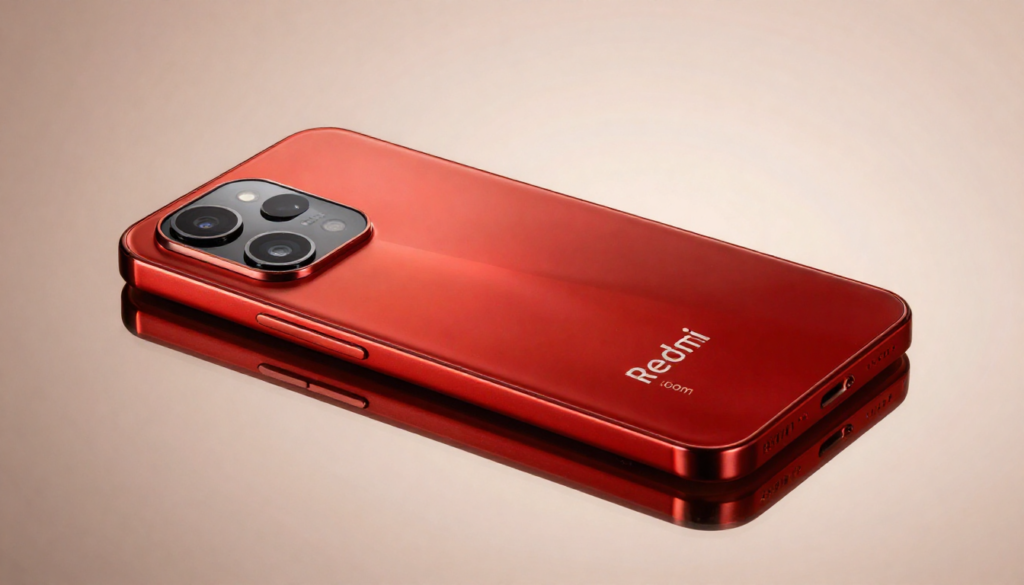
It packs a 6.58-inch FHD+ IPS LCD display with a 90Hz refresh rate, runs on the MediaTek Dimensity 700 chipset, and carries a 5000mAh non-removable battery with 18W fast charging support.
One thing worth knowing right away: the Redmi 10 5G shares its core internals with several other devices. It was launched under the Poco brand as the Poco M4 5G, and the Indian variant was sold as the Redmi 11 Prime 5G. So if you see similar phones with different names, they are likely the same hardware in a different coat.
Full Specs at a Glance
Before diving deeper, here is a quick reference for the key specs:
- Display: 6.58 inches, FHD+ IPS LCD, 90Hz, 401 ppi, Gorilla Glass 3
- Processor: MediaTek Dimensity 700, 7nm, octa-core up to 2.2GHz
- RAM: 4GB or 6GB LPDDR4X
- Storage: 64GB or 128GB UFS 2.2, expandable up to 512GB via microSD
- Main Camera: 50MP with 2MP depth sensor
- Front Camera: 5MP (EU/UK) or 8MP (India and Middle East variants)
- Battery: 5000mAh, 18W fast charging, reverse charging
- OS: Android 12, MIUI 13 at launch
- Connectivity: Dual 5G, Bluetooth 5.1, USB-C, 3.5mm jack, IR blaster
- Protection: IP53 dust and splash resistance, P2i nano coating
- Colors: Aurora Green, Chrome Silver, Graphite Gray
- Starting Price: From $107 (as of 2026)
Display: Big Screen, Bright Enough?
What the Display Delivers
The Redmi 10 5G features a 6.58-inch LCD IPS display with a resolution of 1080×2408 FHD+ and a refresh rate of 90Hz. It delivers a brightness of 400 cd/m² and a contrast ratio of 1500:1. For a budget phone, that is a respectable display on paper.
The AdaptiveSync technology intelligently matches the display to an ideal refresh rate based on the content you are browsing, making the viewing experience more enjoyable while maximizing battery life. In practice, this means the screen adjusts between 30Hz, 50Hz, 60Hz, and 90Hz depending on what you are doing.
Where the Display Falls Short
Here is where I need to be honest with you. The screen is not the strongest point of this phone. According to user feedback, the screen is a weak point, criticized for its low brightness in sunlight and its overall quality.
If you spend a lot of time outdoors or in bright environments, the 400 nit brightness cap will frustrate you. Reading content, watching videos, or navigating maps in direct sunlight can be challenging. This is a real-world trade-off you should factor in before you finalize the Redmi 10 5G to buy.
Performance: MediaTek Dimensity 700 in Action
The Chipset
The Redmi 10 5G uses the MediaTek Dimensity 700 chipset, built on a 7nm process with an octa-core configuration running at up to 2.2GHz. This chipset handles everyday tasks very competently. Scrolling through social media, streaming videos, browsing the web, and using messaging apps all feel smooth enough.
According to AnTuTu (v9), the phone achieved a score of 299111. That number is solidly in the budget tier. It is not going to impress in synthetic benchmarks, but it handles day-to-day usage without notable frustration for most users.
Gaming Performance
Performance is merely okay, with the MediaTek Dimensity 700 providing adequate day-to-day running alongside an underwhelming gaming experience.
If mobile gaming is a priority for you, be realistic about what this phone can do. Casual games run perfectly fine. Demanding titles like Genshin Impact or Call of Duty Mobile will run, but expect lower graphics settings and some thermal throttling over long sessions. The phone is not built for intensive gaming.
RAM and Multitasking
The 4GB RAM configuration feels constrained under MIUI when multitasking with three or more apps, handling document editing, or switching between productivity tools. If you regularly jump between multiple apps or work on the go, the 4GB model may test your patience. Spending slightly more for the 6GB variant is worth considering if your budget allows it
Camera: 50MP Main Sensor
What the Camera Can Do
The Redmi 10 5G packs a 50MP main camera with a 2MP depth sensor. In good lighting conditions, the 50MP sensor captures detailed, color-accurate photos that look impressive for the price point. Daylight shots punch above their weight class, showing strong dynamic range and natural color processing.
Front-facing cameras vary regionally: 5MP in most EU and UK units, 8MP in some Indian and Middle Eastern variants. If selfie quality is important to you, check which variant you are buying and what front camera it carries.
Camera Limitations
The dual camera system is minimal. There is no ultra-wide lens and no telephoto option. The complete lack of an ultra-wide lens, let alone a telephoto lens, is a limitation. The 2MP macro sensor that is there is scarcely worth the space.
In low light, the performance drops noticeably. Budget sensors struggle in dim environments, and the Redmi 10 5G is no exception. Night photography produces noisy, soft images that require good post-processing to look presentable. If you take a lot of evening or indoor photos, you will feel this limitation regularly.
Video recording tops out at 1080p. There is no 4K capability. For casual social media clips and family memories, 1080p is fine. For content creators or anyone who shoots video seriously, this will feel restrictive.
Battery Life: One of the Best Features
5000mAh That Actually Lasts
The Redmi 10 5G’s battery is genuinely one of its strongest selling points. With a 5000mAh battery on board alongside modest specifications, it has the potential to last a full two days on a single charge.
The combination of the efficient Dimensity 700 chipset, the adaptive refresh rate display, and the large battery capacity creates a setup that is very easy on power consumption. Light to moderate users will easily get through a full day and then some on a single charge. Heavy users who stream video, play games, and use 5G connectivity will land closer to a full day.
Charging Speed
The 18W fast charging is decent but not exciting by 2025 standards. A full charge from empty takes roughly 90 minutes. The phone also supports reverse charging, which means you can use it as a power bank in a pinch to charge earbuds or other small devices.
If you are used to the 30W, 45W, or 65W fast charging speeds seen in mid-range phones today, 18W will feel slow. Budget accordingly.
5G Connectivity: The Main Attraction
Dual 5G Support
The Redmi 10 5G supports dual SIM dual standby mode and enables strong network signals, allowing you to play games and make video calls without any lag. Dual 5G on a sub-$120 phone is a genuine value proposition. You get the speed and low latency of 5G without paying mid-range or premium prices.
Carrier Compatibility Warning
This is one of the most important things to check before you buy. The Redmi 10 5G supports 5G in the USA but only on T-Mobile and Mint Mobile networks using bands n41 and n71. AT&T and Verizon users will typically connect to 4G LTE only.
If you are on AT&T or Verizon, buying this phone for its 5G capability makes no sense. You will be using it as a 4G phone, which defeats the primary purpose. Always verify your carrier’s band compatibility before purchasing.
Storage and Expandability
The Redmi 10 5G was sold in 4/64GB, 4/128GB, and 6/128GB memory configurations. All models support microSD expansion up to 512GB. The dedicated microSD slot is separate from the dual SIM tray, which means you do not have to choose between expandable storage and a second SIM card. That is a practical advantage that many competing budget phones do not offer.
The UFS 2.2 flash storage allows you to watch videos, play games, and install apps without noticeable lag. UFS 2.2 is noticeably faster than the eMMC storage found in older budget phones. App launches are quicker, file transfers are faster, and the overall system experience feels more responsive because of it.
Build Quality and Design
The Redmi 10 5G has a plastic back with a wavy texture and a Gorilla Glass 3 front panel. The phone also has IP53 dust and splash protection and P2i nano coating. IP53 is not the same as IP67 or IP68 waterproofing, but it means the phone can handle light rain and accidental splashes without damage.
On the top edge, you get an IR blaster and a 3.5mm headphone jack. The bottom of the phone carries a USB-C port, a speaker, and a microphone. On the right side, there are the volume rocker and the power button with an integrated fingerprint scanner.
The fingerprint scanner is fast and accurate in everyday use. It is not an under-display sensor, which keeps costs down and reliability up. The IR blaster is a genuinely useful bonus that lets the phone control TVs, air conditioners, and other home appliances.
Software: MIUI 13 and Update Reality
What You Get Out of the Box
The Redmi 10 5G ships with MIUI 13 on top of Android 12. MIUI is a feature-rich skin with a lot of customization options. It adds useful tools like a second space for apps, floating windows, and extensive theme support.
The Update Problem
Here is where you need to pay close attention. Official OS update support ended in late 2023. As of mid-2024, no Android 13 or security patches beyond Q2 2024 are planned per Xiaomi’s global update policy.
EU and UK models received Android 13 in Q1 2023 with the last security patch in March 2024. Indian models are stuck on Android 12. Global unlocked imports sold via third-party channels often ship with outdated MIUI versions lacking Google Play Services certification.
If long-term software support matters to you, this is a real concern. A phone with no security updates is increasingly vulnerable over time. For casual users who replace phones every two to three years, it matters less. For anyone who keeps phones for four or five years, it is a meaningful limitation.
MIUI’s adware behavior, including pre-installed bloat, notification banners, and system-level analytics, remains present unless disabled via Developer Options and App Permissions. This is a common complaint with MIUI-based devices, and the Redmi 10 5G is no different. You can disable most of it manually, but it requires some effort upfront.
Who Should Buy the Redmi 10 5G?
This phone is the right choice for you if:
- You need affordable 5G connectivity and your carrier supports the phone’s bands (especially T-Mobile users)
- You are a light to moderate smartphone user who prioritizes battery life over peak performance
- You want a large screen at a genuinely budget-friendly price
- You are replacing an older 4G phone and want to future-proof your connectivity without spending heavily
- You are buying a secondary device or a first phone for a family member who does not need flagship performance
- You care about audio and accessories, since the 3.5mm jack and IR blaster are increasingly rare in modern phones
Who Should Skip the Redmi 10 5G?
The Redmi 10 5G is not the right choice if:
- You need long-term software support beyond 2024, since security patches have stopped
- You are on AT&T or Verizon, as you will not get 5G connectivity on these networks
- You play demanding mobile games, as the Dimensity 700 and 4GB RAM configuration will limit your experience
- You photograph frequently in low light, since the camera struggles without good lighting
- You multitask heavily, as 4GB RAM under MIUI feels tight with three or more apps running simultaneously
- You want fast charging, since 18W is below what many competing phones offer at similar price points
Redmi 10 5G vs Competitors: How It Stacks Up
Redmi 10 5G vs Redmi Note 10 5G
The Redmi Note 10 5G launched in 2021 with a Snapdragon 480 and 48MP main camera. The Redmi 10 5G uses MediaTek Dimensity 700 and a 50MP sensor. They are different chipsets, different displays, and different update paths. The Note 10 5G is an older device, and the Redmi 10 5G generally offers a better camera and similar chipset performance.
Redmi 10 5G vs Poco M4 5G
The Redmi 10 5G was launched under the Poco brand as the Poco M4 5G with different designs and a primary camera. The core hardware is essentially the same. The Poco M4 5G sometimes comes with a slightly different camera configuration. Choose based on availability and pricing in your region.
Redmi 10 5G vs Redmi A3
The Redmi A3 starts from around $103, while the Redmi 10 5G starts from $107. The Redmi A3 is even more budget-friendly but does not offer 5G. If 5G matters to you, the Redmi 10 5G is the obvious pick between these two.
Where to Buy the Redmi 10 5G
The Redmi 10 5G is widely available across several channels. Here are the best options depending on your location:
- Xiaomi’s official website and Mi Store app: Best for getting the correct regional variant with proper firmware and warranty support.
- Amazon: Wide availability, often with competitive pricing and reliable shipping.
- Local carrier stores: Some carriers bundle the phone with 5G plans, which can lower the upfront cost significantly.
- Electronics retailers: Best Buy, Flipkart (India), and similar stores stock the phone with regional warranties.
- Third-party importers: Avoid these unless you are experienced with firmware flashing, as global unlocked imports often ship with outdated MIUI versions lacking Google Play Services certification.
Always buy from authorized sellers to ensure you receive the correct regional variant, a valid warranty, and up-to-date firmware.
Price: Is It Worth It in 2026?
The Redmi 10 5G starts from around $107 as of 2026. For that price, you get dual 5G, a 6.58-inch 90Hz FHD+ display, a 50MP camera, a massive 5000mAh battery, and UFS 2.2 storage. That is an objectively impressive list of features at the sub-$120 price point.
The value equation is strong if you prioritize connectivity and battery life over software longevity, camera versatility, or top-tier performance. If you are on a tight budget and need 5G, there are very few phones that match what the Redmi 10 5G offers at this price.
However, if your budget stretches to $150 or $180, you can access devices with better software support, faster charging, and improved cameras. The extra investment may be worth it for users who keep phones for three or more years.
Conclusion
The Redmi 10 5G is a genuinely impressive device for its price. It delivers dual 5G connectivity, a large FHD+ display, a competitive 50MP camera, and outstanding battery life for just over $100. That combination is hard to beat at this price point.
But it is not a perfect phone. The software support has effectively ended. The display struggles in bright sunlight. The camera system lacks versatility. And if you are on AT&T or Verizon, the 5G capability you are paying for will not even work on your network.
So is the Redmi 10 5G to buy worth it? For light users, first-time smartphone buyers, secondary devices, or anyone on T-Mobile who needs affordable 5G, absolutely yes. For heavy users, gamers, photography enthusiasts, or anyone planning to keep the phone beyond 2025, you may want to stretch your budget slightly further.
What is the most important feature on your next smartphone? Battery life, camera quality, or 5G speed? Tell us in the comments, share this guide with someone making the same decision, and check the carrier compatibility for your region before you click buy.

Frequently Asked Questions About Redmi 10 5G
1. Is the Redmi 10 5G worth buying in 2026? Yes, if you need affordable 5G and prioritize battery life. It starts at around $107 and delivers strong fundamentals. However, software support has ended, so factor that in if you plan to keep the phone long-term.
2. Does the Redmi 10 5G support 5G in the United States? It supports 5G only on T-Mobile and Mint Mobile networks using bands n41 and n71. AT&T and Verizon users will only get 4G LTE connectivity.
3. How long does the Redmi 10 5G battery last? The 5000mAh battery typically lasts a full day for heavy users and up to two days for light to moderate users, thanks to the efficient Dimensity 700 chipset and adaptive refresh rate display.
4. Does the Redmi 10 5G have a headphone jack? Yes. The phone includes a 3.5mm headphone jack on the top edge alongside an IR blaster, which is increasingly rare in modern smartphones.
5. Is the Redmi 10 5G waterproof? It carries an IP53 rating, meaning it is splash and dust resistant. It can handle light rain and accidental splashes, but it is not designed for submersion in water.
6. Can I expand storage on the Redmi 10 5G? Yes. The phone includes a dedicated microSD card slot that supports cards up to 512GB, separate from the dual SIM tray. You do not have to choose between extra storage and a second SIM.
7. What is the difference between Redmi 10 5G and Redmi Note 10 5G? They are different phones entirely. The Redmi Note 10 5G uses a Snapdragon 480 and a 48MP camera. The Redmi 10 5G uses a MediaTek Dimensity 700 and a 50MP camera. They were also released in different years and have different update paths.
8. Does the Redmi 10 5G support NFC? No. The standard Redmi 10 5G does not include NFC. If contactless payments are important to you, check for a variant that includes NFC or consider an alternative device.
9. What Android version does the Redmi 10 5G run? It launched with Android 12 and MIUI 13. EU and UK models received an Android 13 update in Q1 2023. Indian models remain on Android 12. Security patches stopped in early to mid-2024.
10. How does the Redmi 10 5G camera perform in low light? Low-light performance is limited, as expected from a budget phone. The 50MP sensor struggles in dim conditions, producing noisy and soft images. It performs best in daylight or well-lit indoor environments.
also read: creativelabhub.com
email: johanharwen@314gmail.com
Author Name: Rashid Malik
About the Author : Rashid Malik is a technology journalist and mobile reviewer with over ten years of experience covering smartphones, consumer electronics, and emerging connectivity technologies. He specializes in budget and mid-range device analysis, helping everyday consumers make smarter purchasing decisions without overspending. Rashid has reviewed hundreds of devices across Android and iOS ecosystems and contributes to several leading tech publications. When he is not testing phones, he is following the latest developments in 5G infrastructure and mobile chipset performance.
